Designing for Financial Confidence
A case study on Vynt, bridging the gap between high-stakes compliance and seamless user experience.
Summary
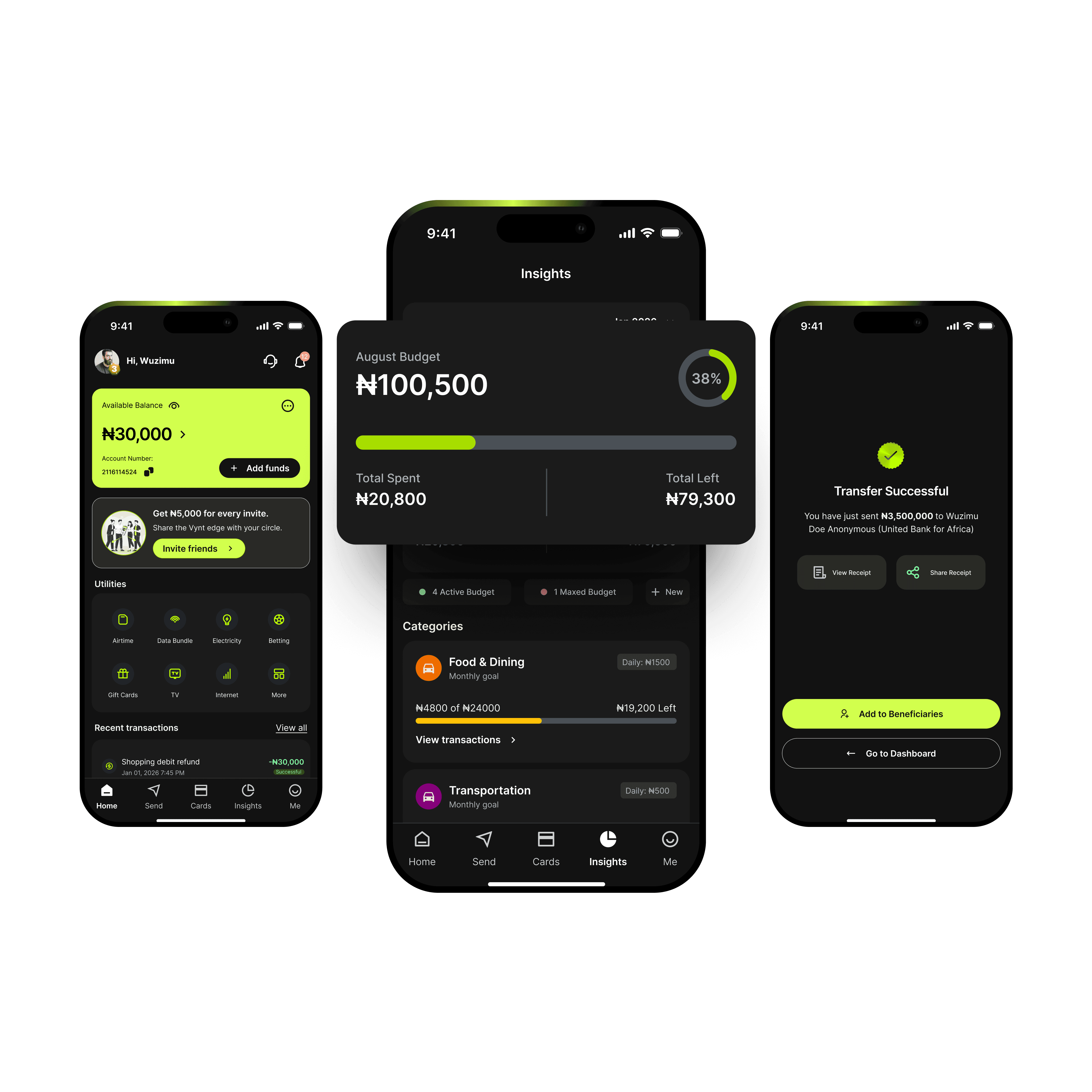
Vynt is a high-velocity fintech ecosystem designed to solve the 'Trust Gap' in digital banking. Beyond a streamlined onboarding pivot that increased user activation, I engineered a surgical payment flow, a biometric-secured card vault, and a predictive budgeting engine , all built on a Tier-based compliance framework."
Project type
Product Design
Role
UIUX Designer
Industry
Fintech
Duration
3 weeks
The Challenge: Speed vs. Certainty

In a world of 5-second attention spans, complex bank transfers often take 3 minutes too long.
My goal was to make the 'Complex' feel 'Instant.'
“However, speed is nothing without trust.”
Digital fraud and transaction errors are high, users feel a deep 'transfer anxiety' that slows down adoption.
Most existing banking apps feel like cold, static spreadsheets,they provide data, but no reassurance.
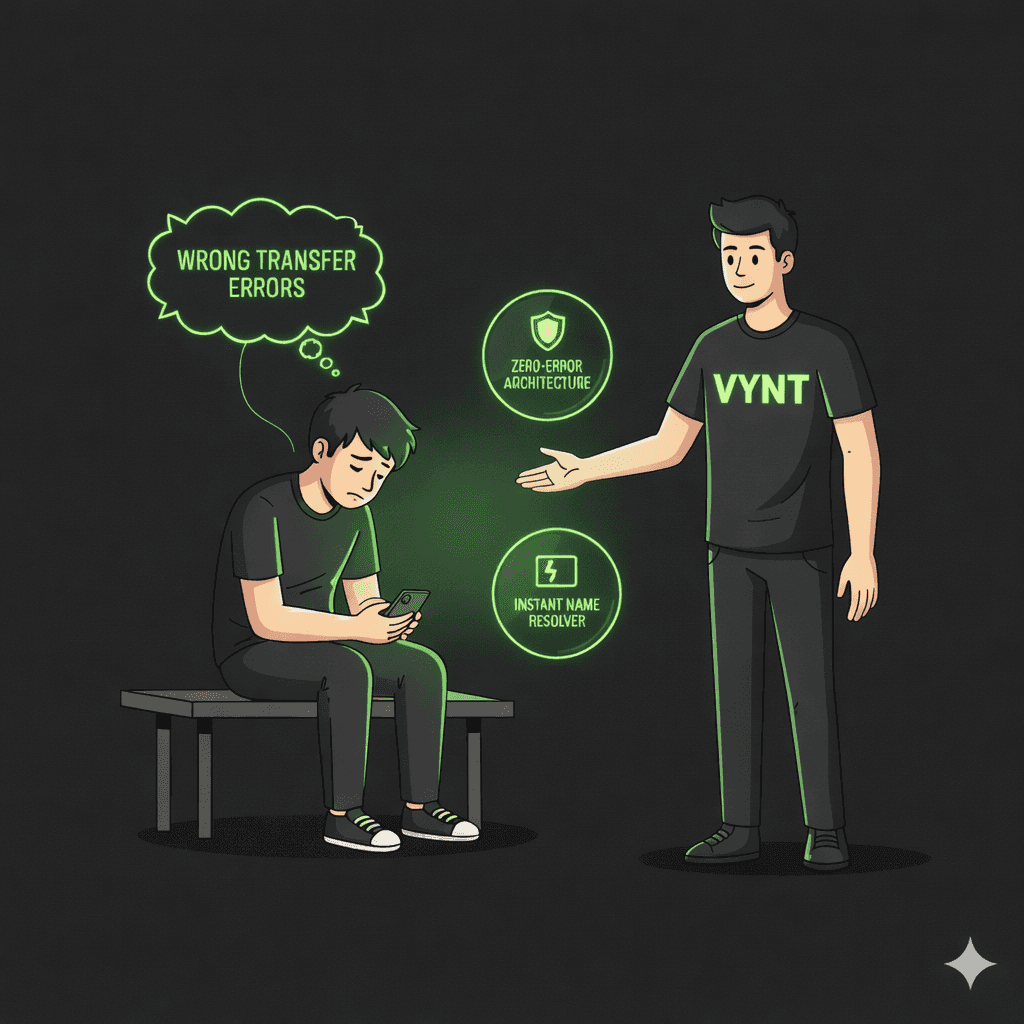
“Vynt was born to change that. I designed Vynt to make banking feel active, secure, and human.”
To bring this 'Human' banking experience to life, I focused on four architectural pillars:
1
Seamless onboarding
2
30-seconds Transfer
3
Zero-Error Architecture.
4
Active Tracking (Insights & Budgets)

Seamless Onboarding: From Sign-up to Tier 1.
The Initial Concept: I originally allowed users to skip KYC and enter the dashboard immediately. I used dimmed states and inactive wallets to tease the UI features.
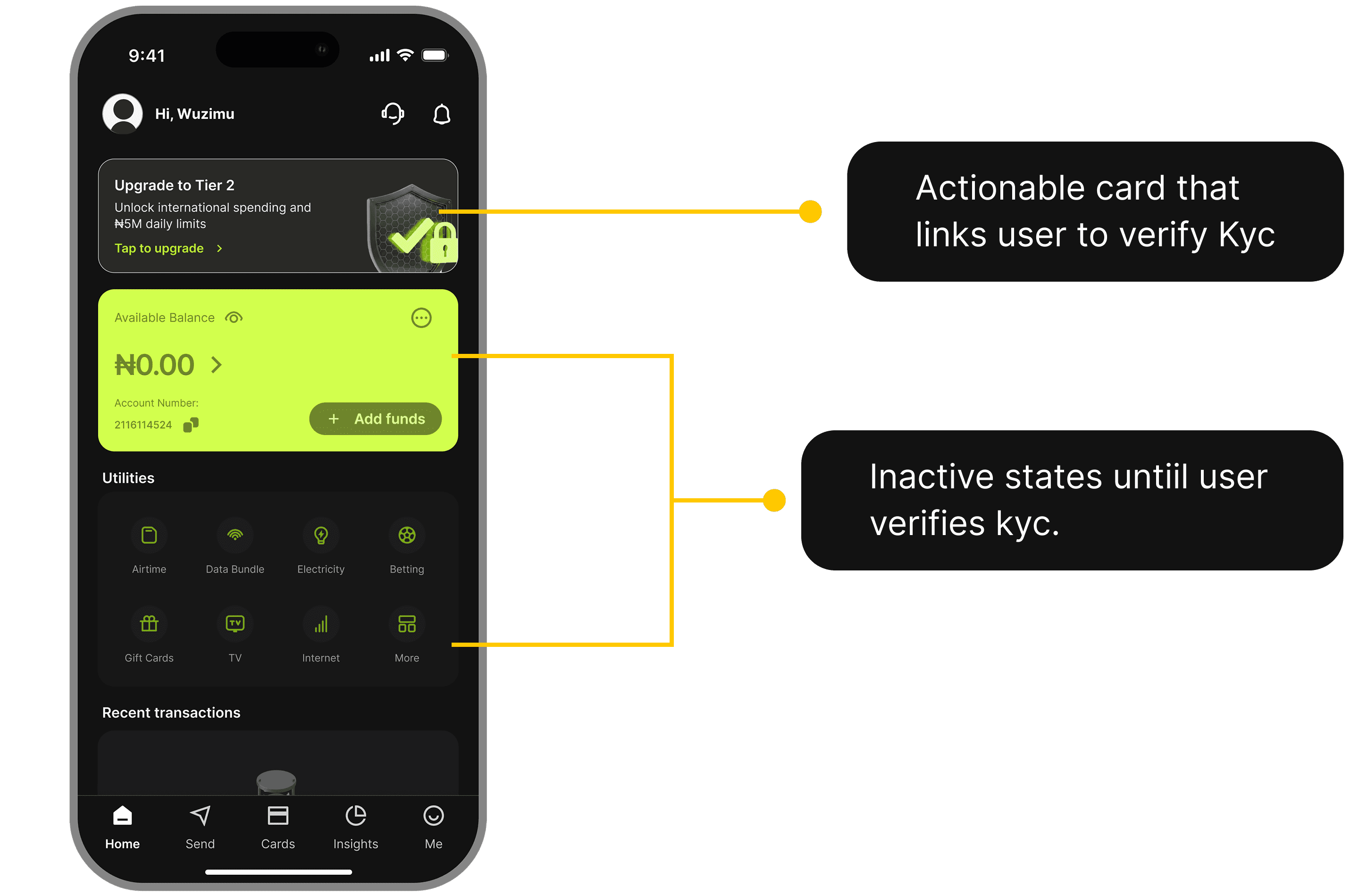
Testing showed that a "locked" bank is a dead end. Seeing features you can’t use created frustration, not motivation.
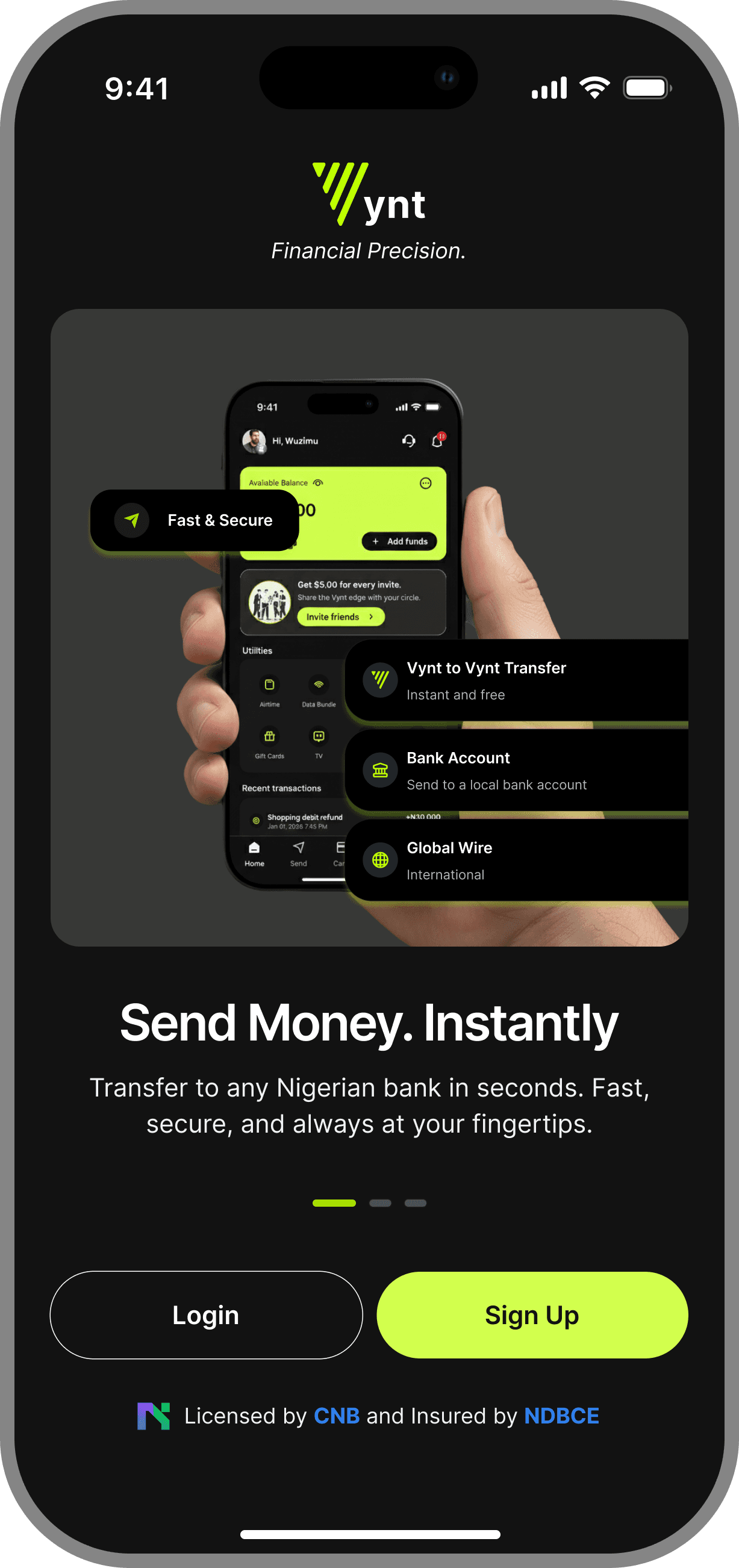
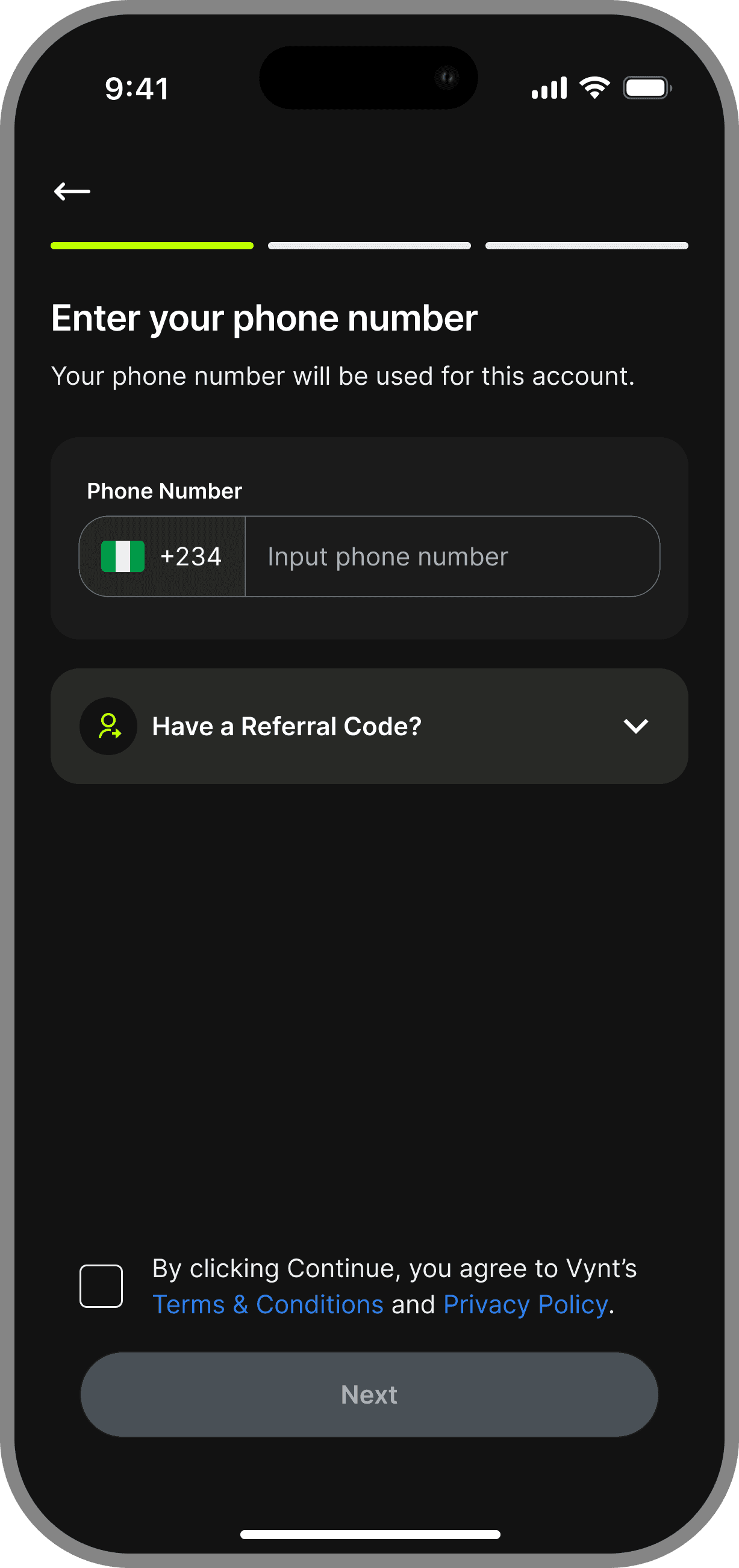
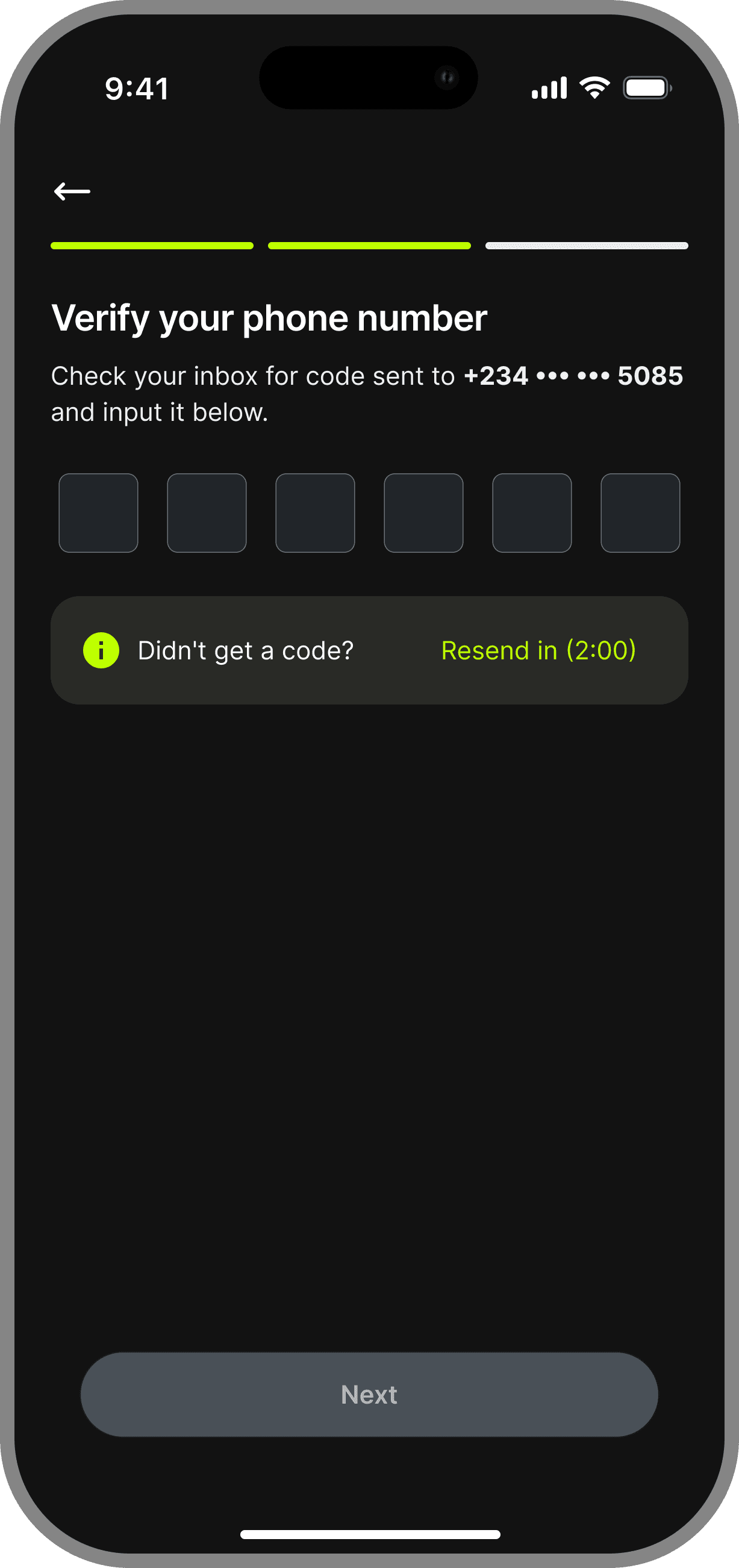
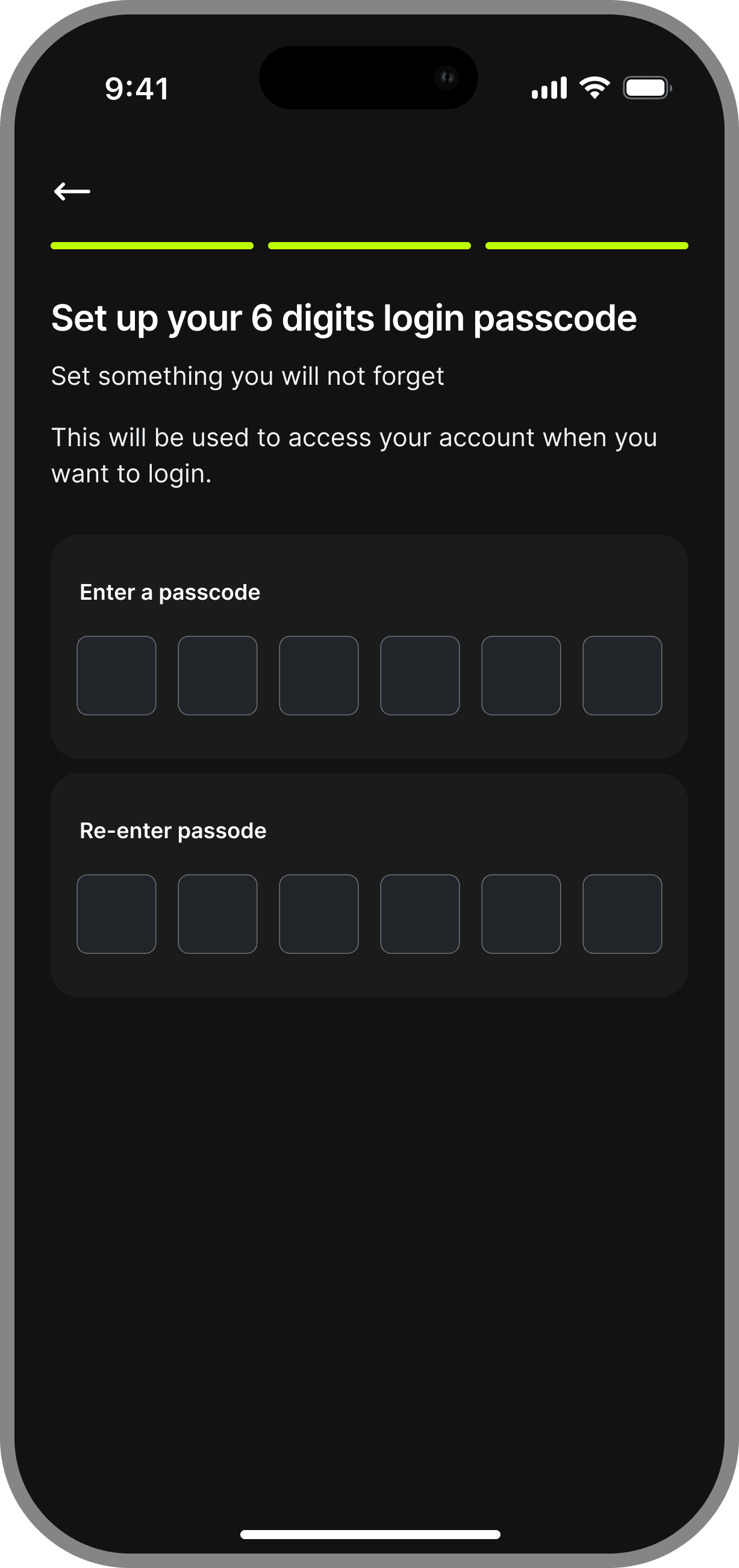
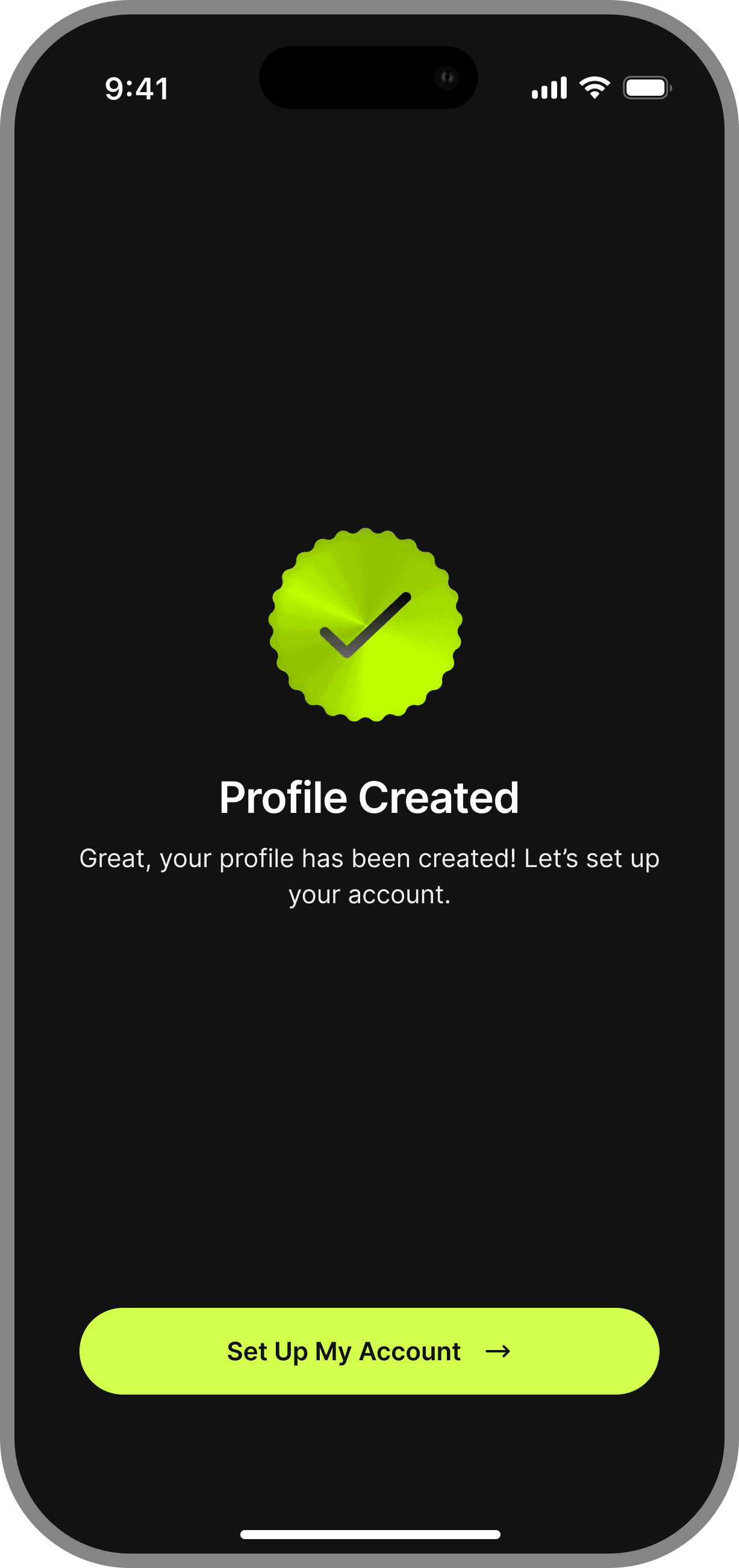
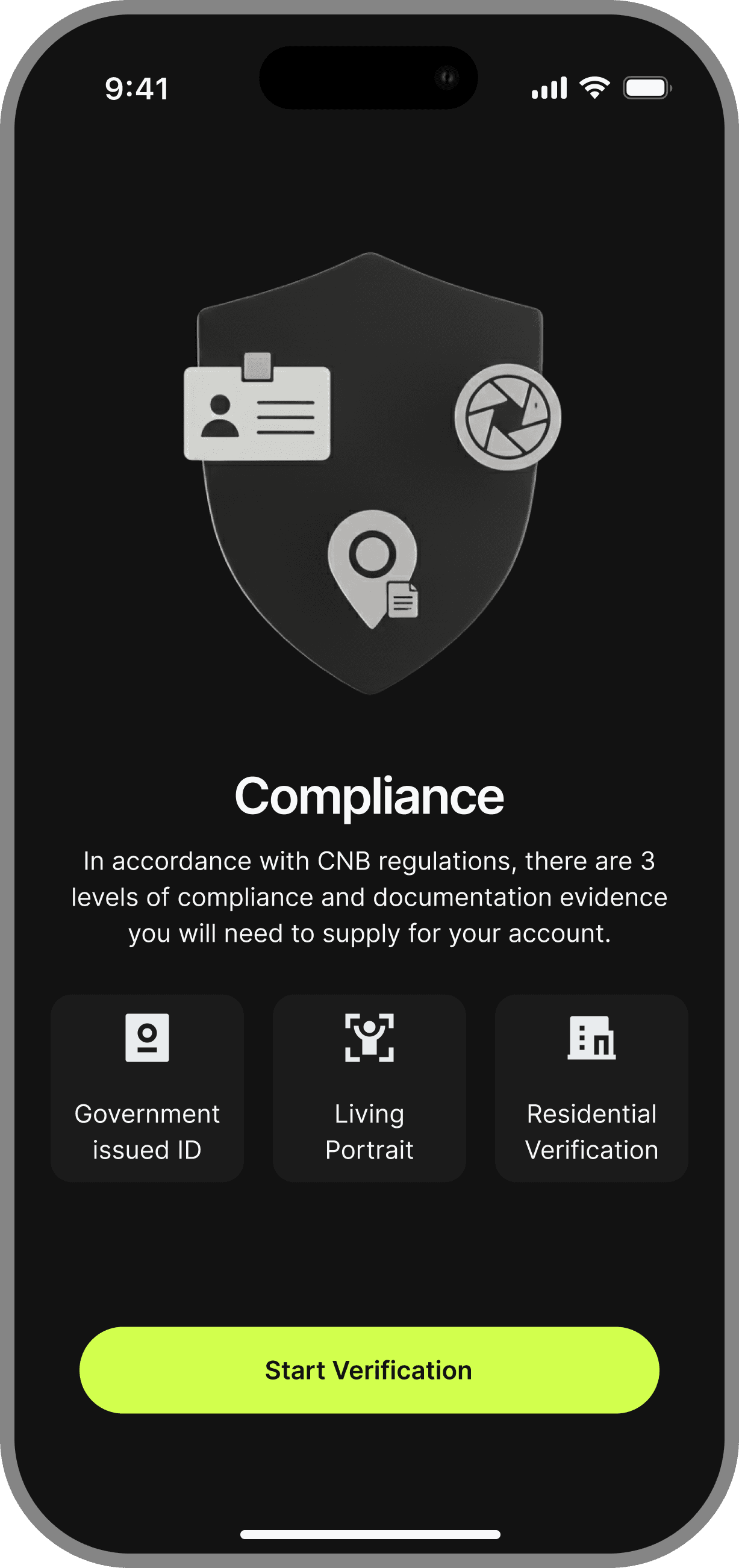
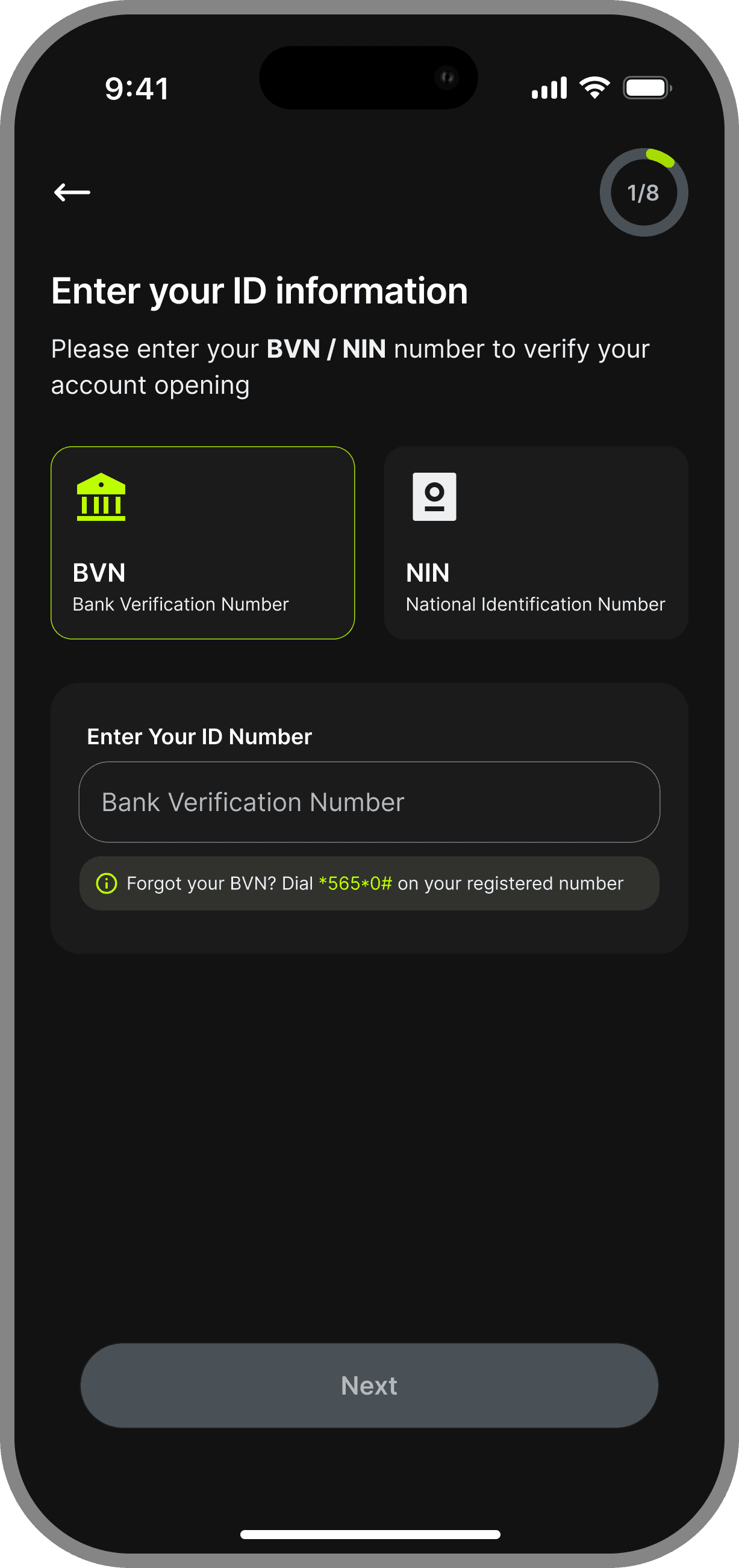
The Pivot: I shifted to a Mandatory Tier 1 Flow during onboarding. This ensures that the moment a user lands on the Dashboard, the "lights are on" and the app is functional.
Sign-Up flow
Tier 1 Upgrade flow
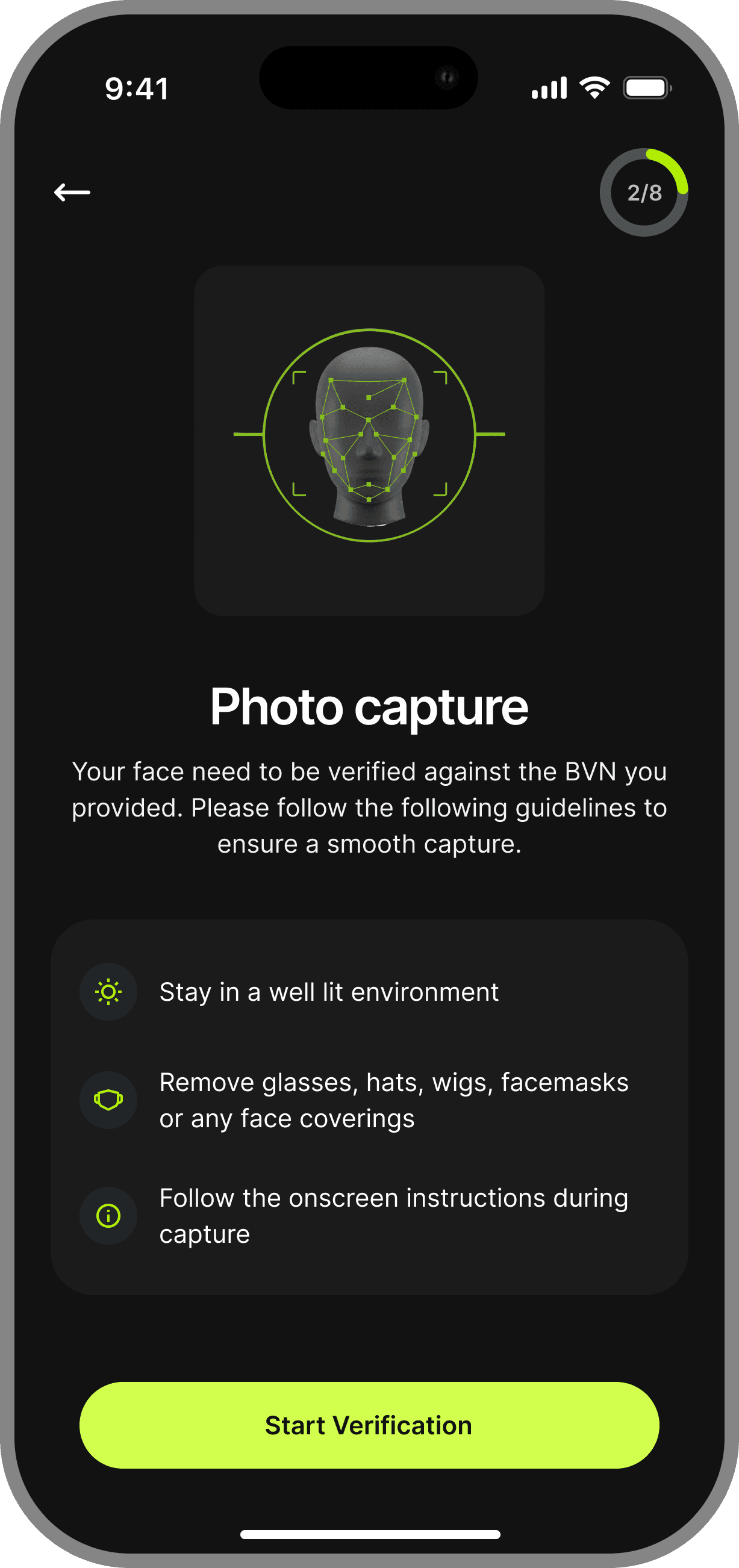
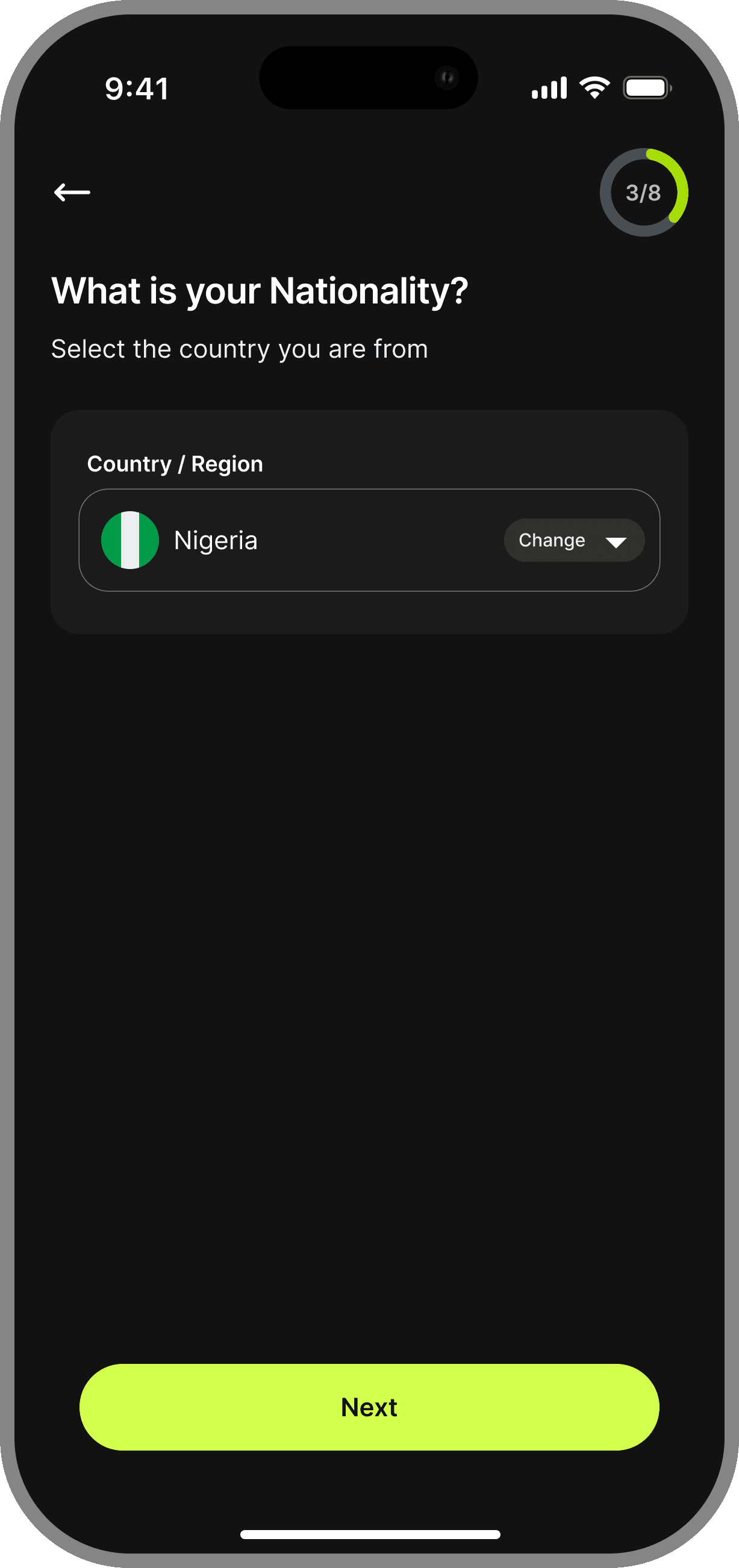
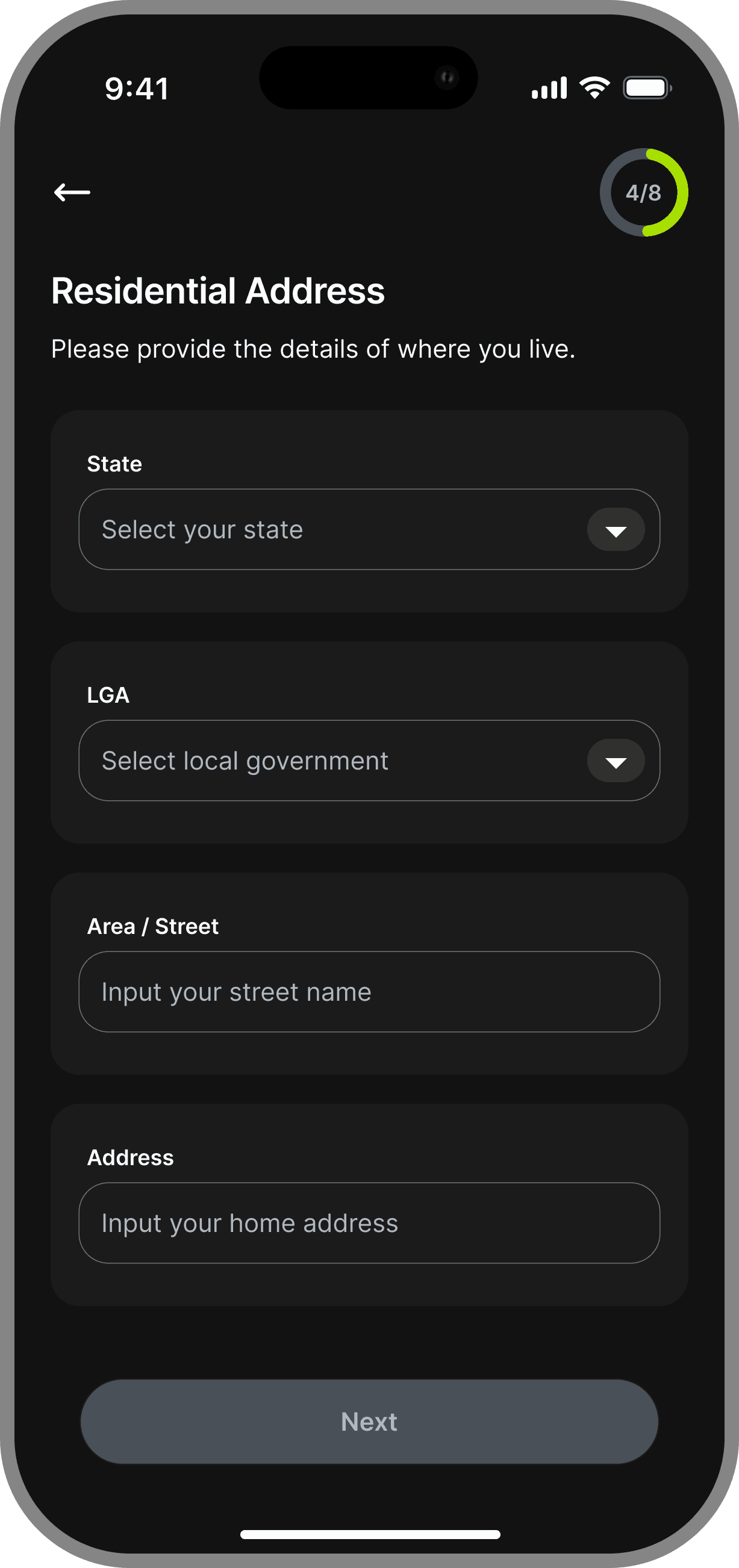

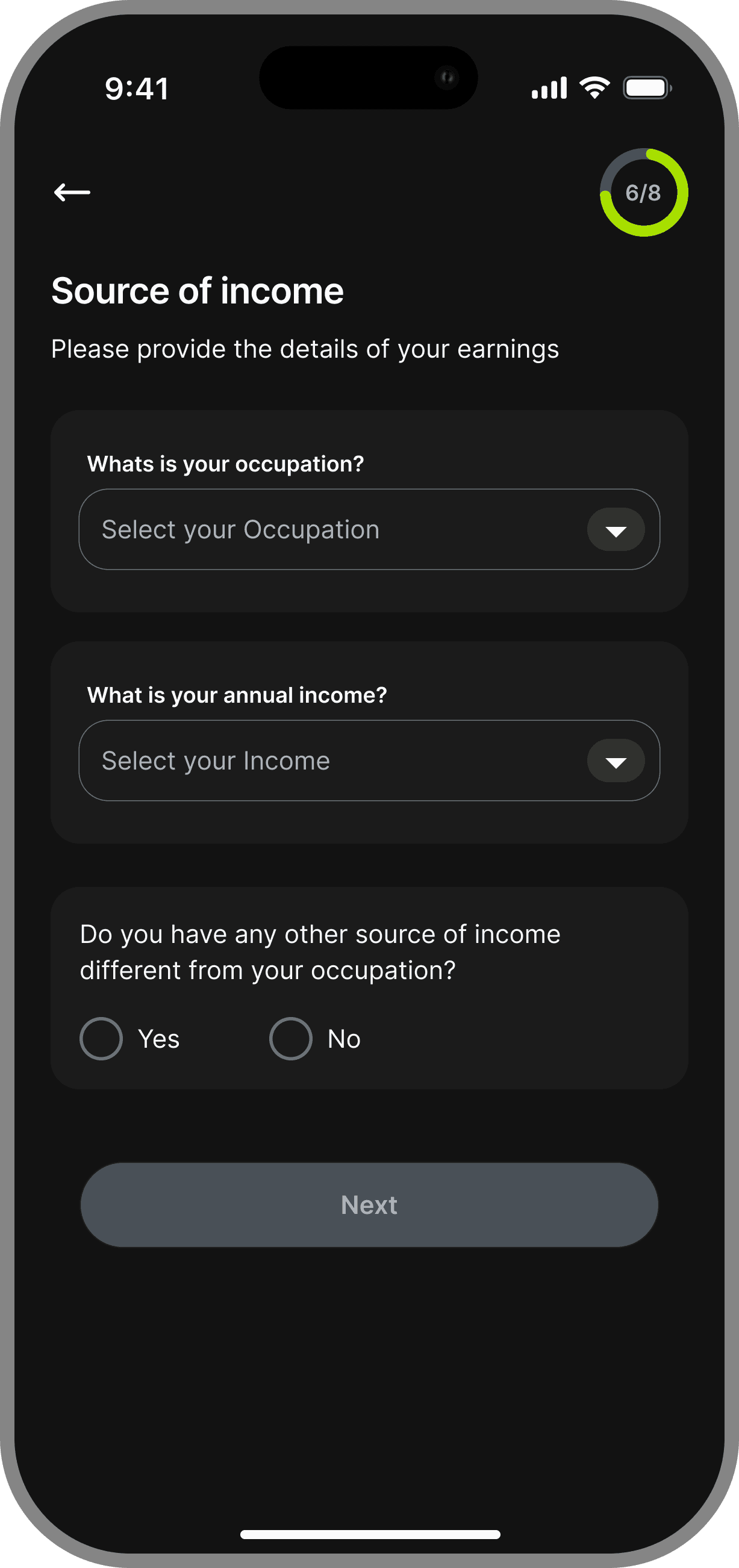
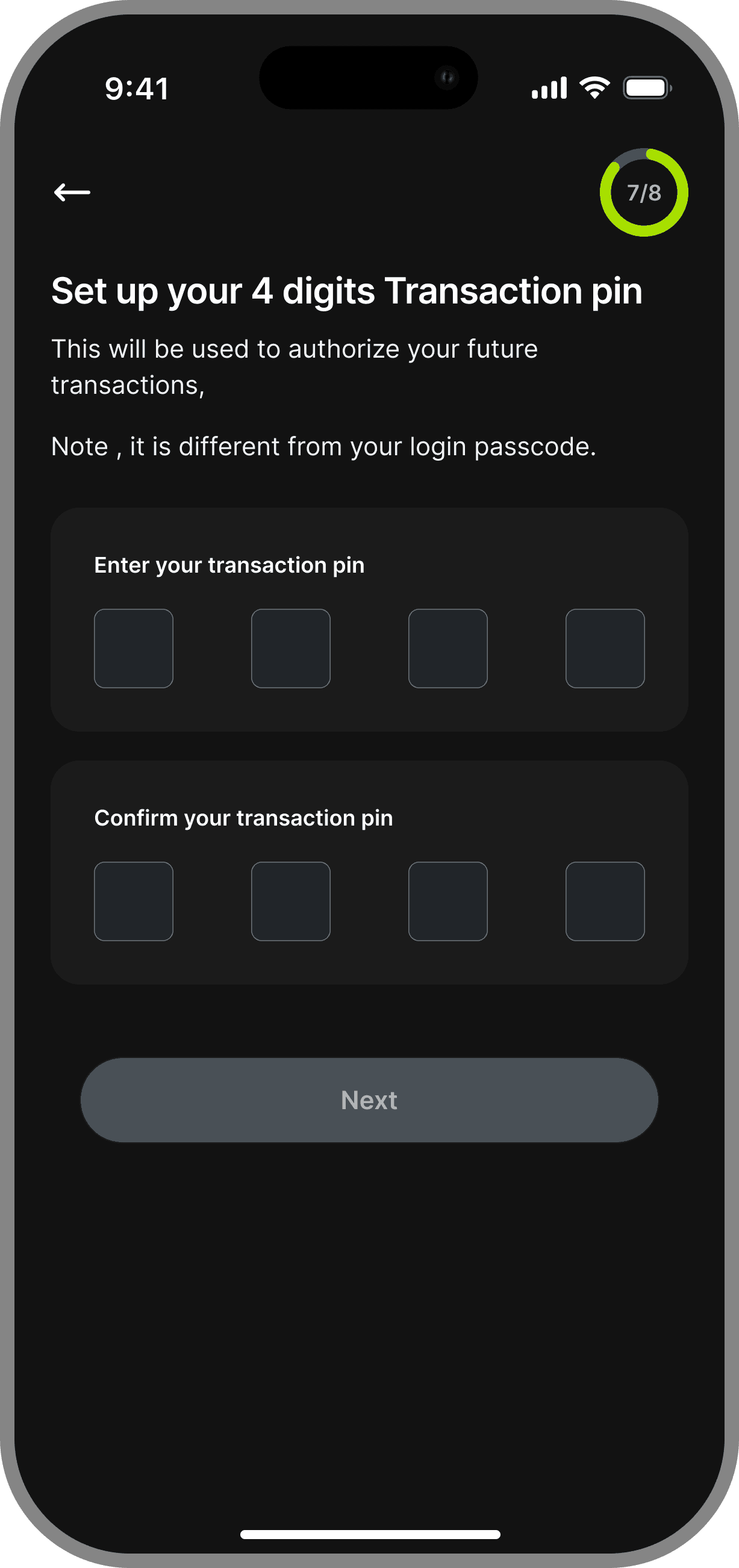
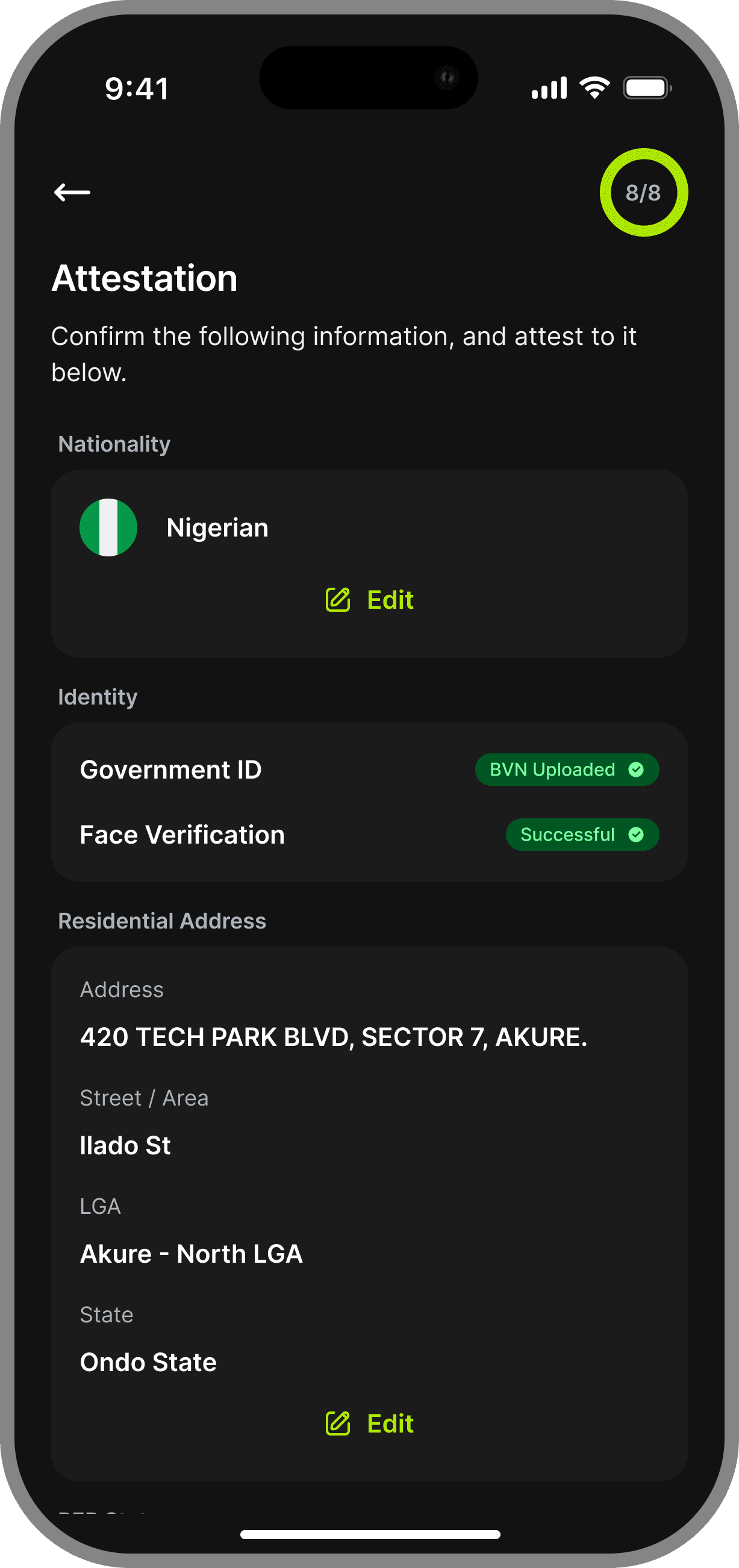
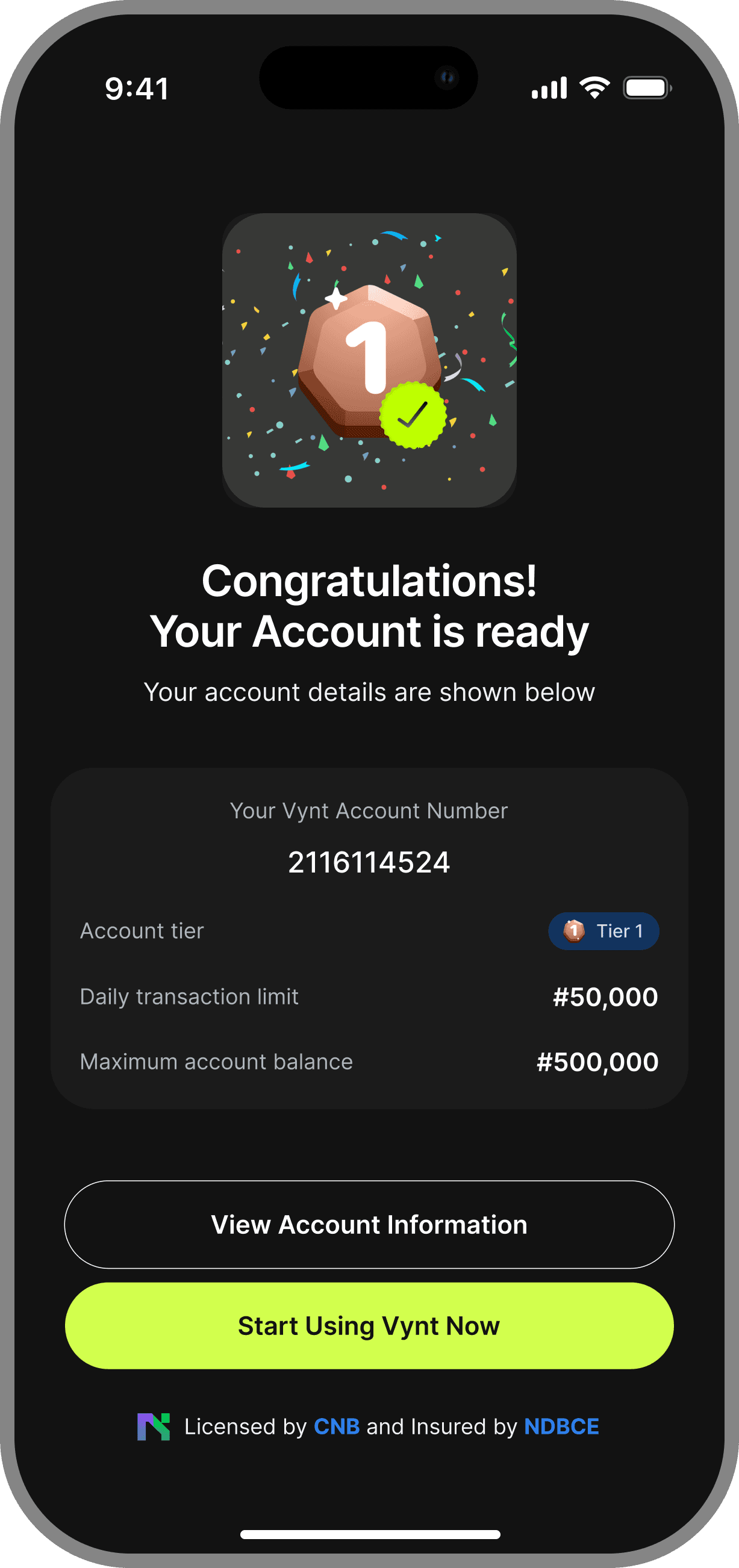
Result: Users move from "Sign-up" to "First Transaction" without hitting a locked door.
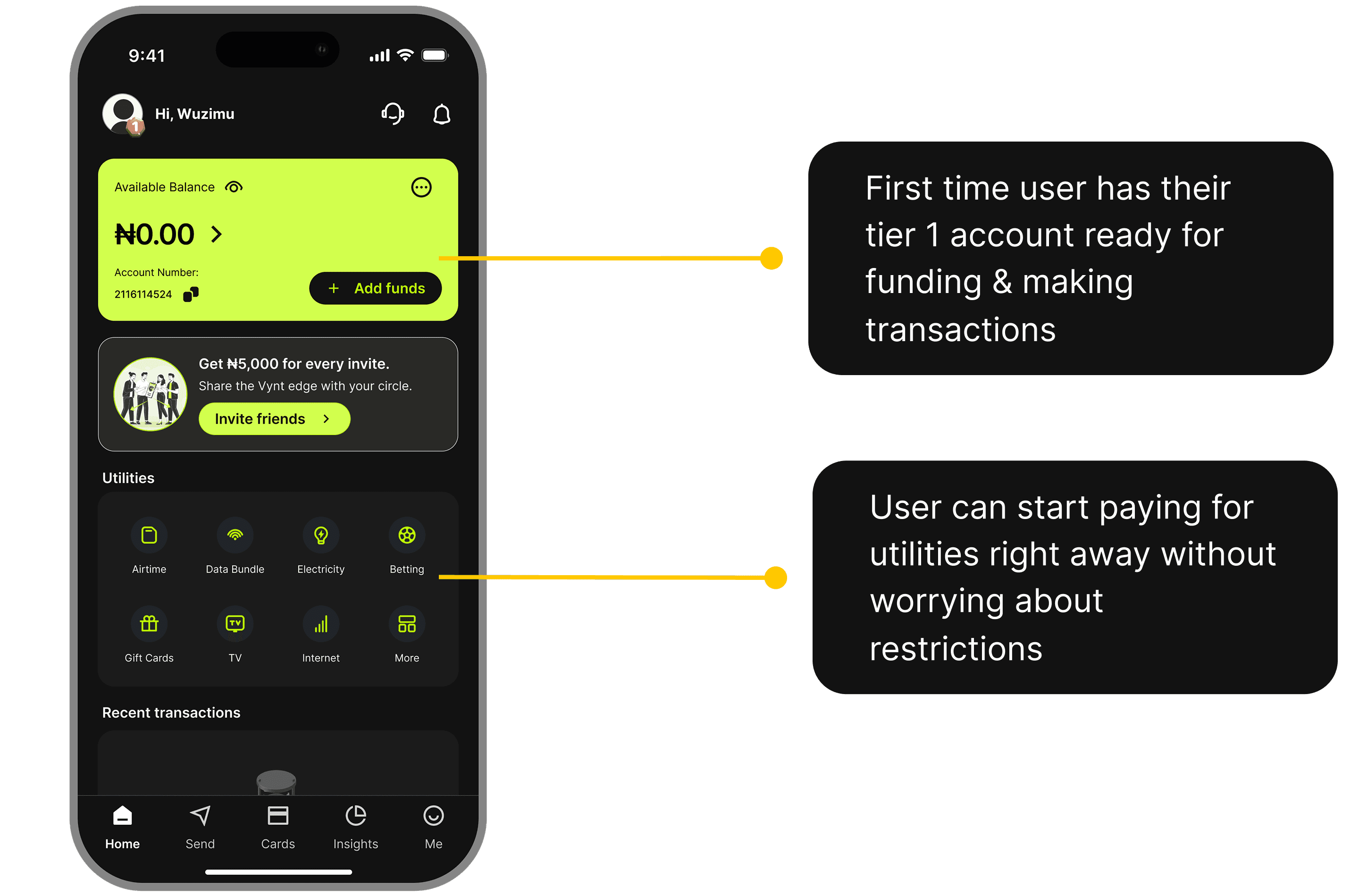
The Frictionless Path: 30-Seconds Transfer
The Problem: Sending money to frequent contacts took too many steps and too much typing.
The Fix: On the Send screen, clicking a Saved Beneficiary or a Recent Transaction skips the bank setup.
Send to beneficiary
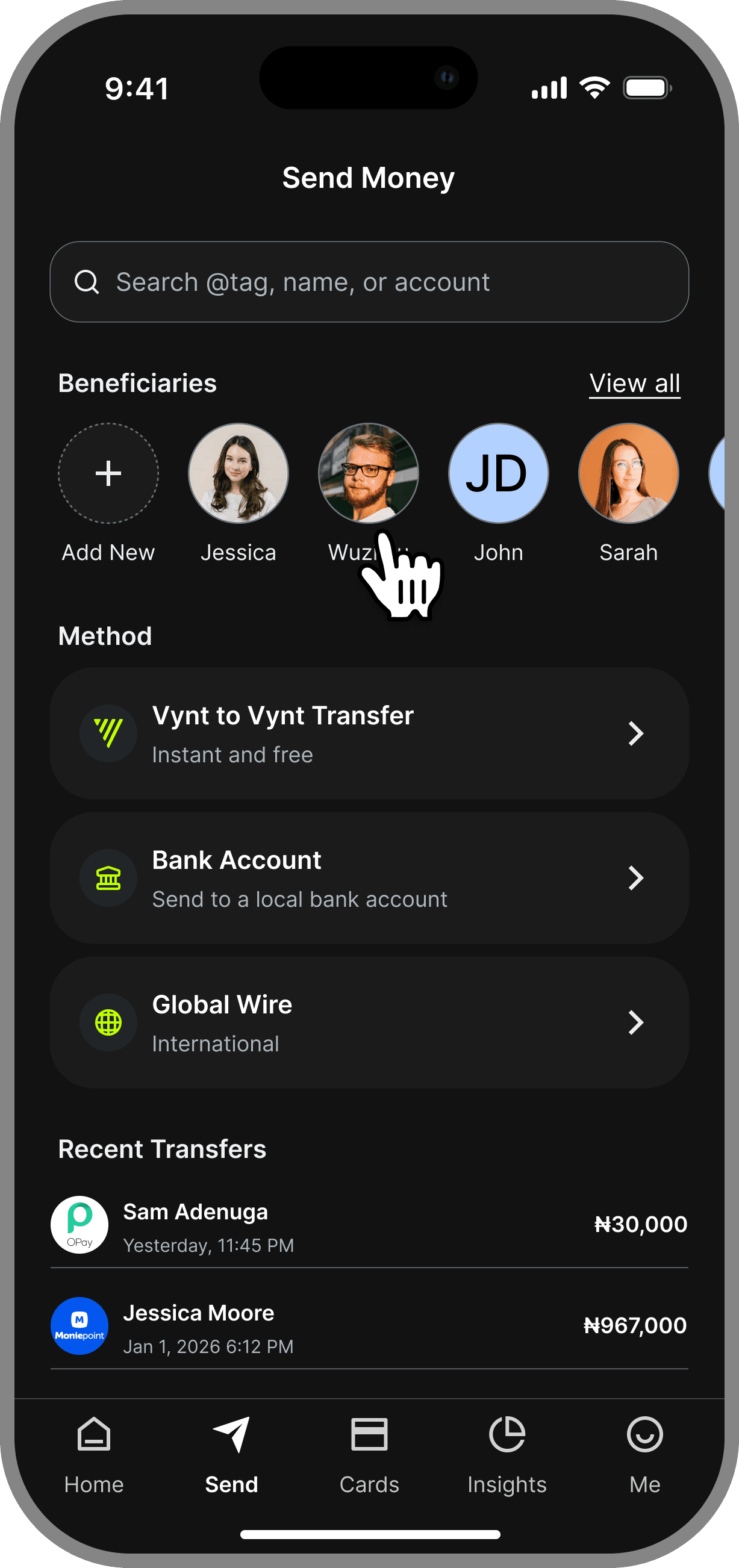
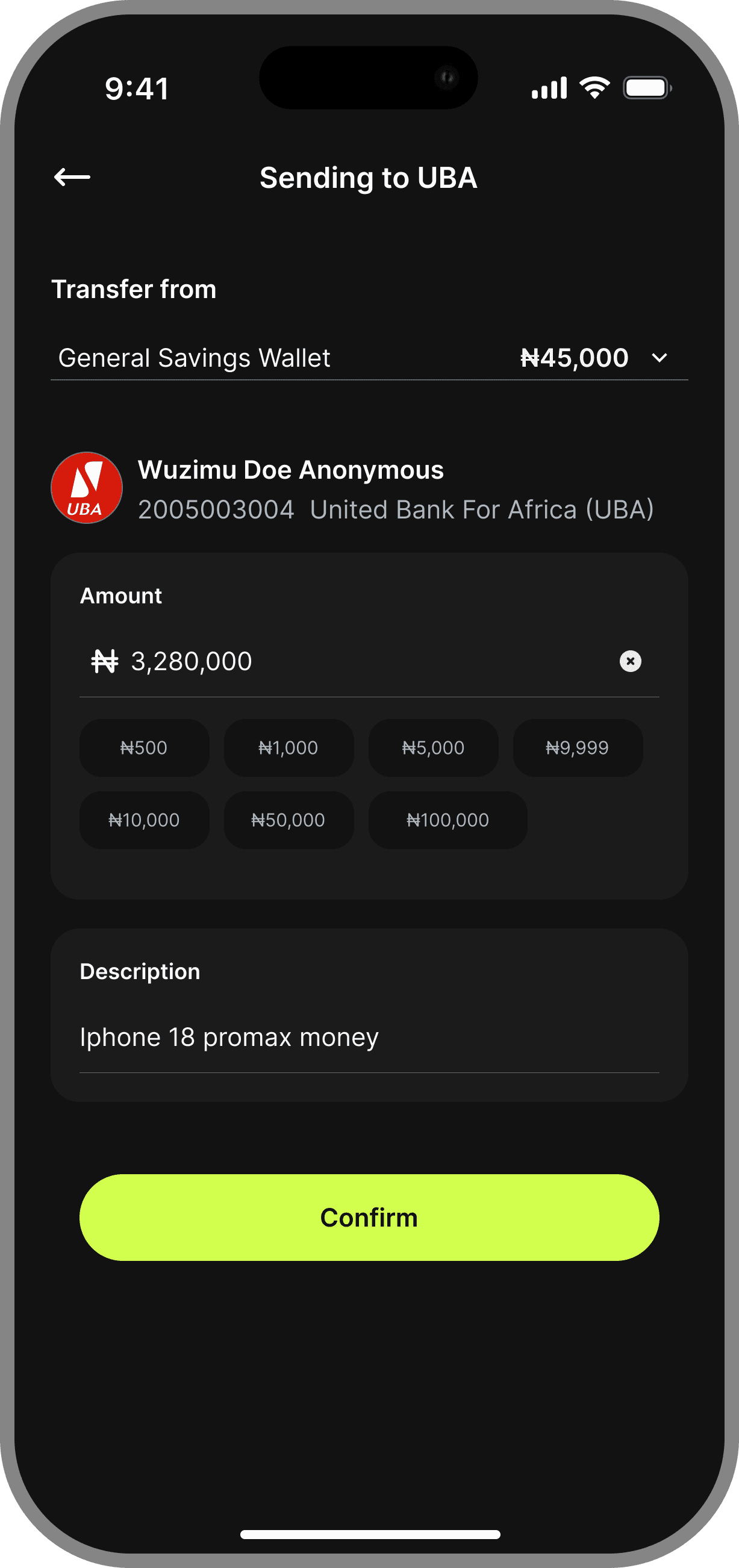

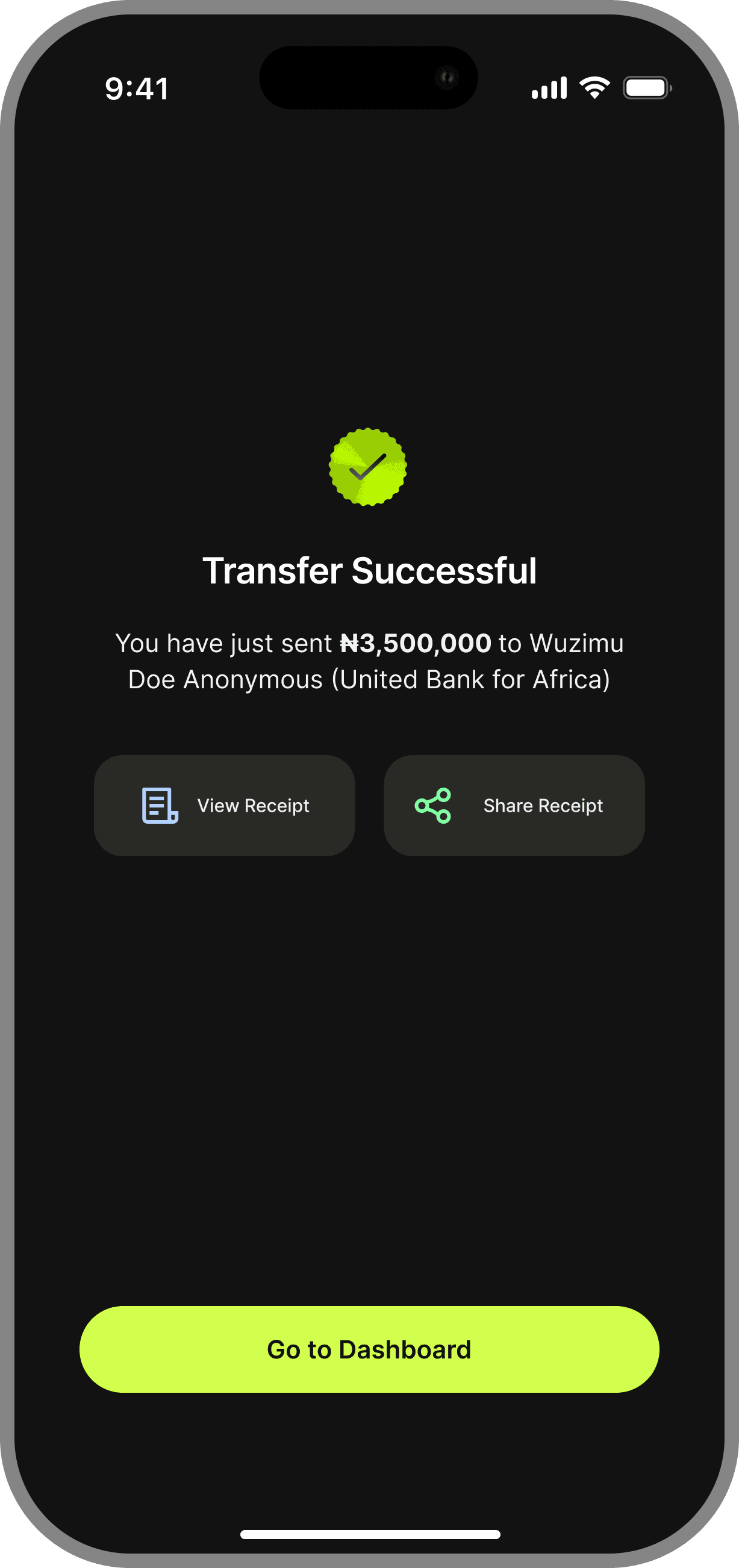
The Result: Users just edit the amount and use biometrics or pin entry. A repeat transfer now takes 3 clicks & less than a minute.
Zero-Error Architecture: Precision in Every Transaction.
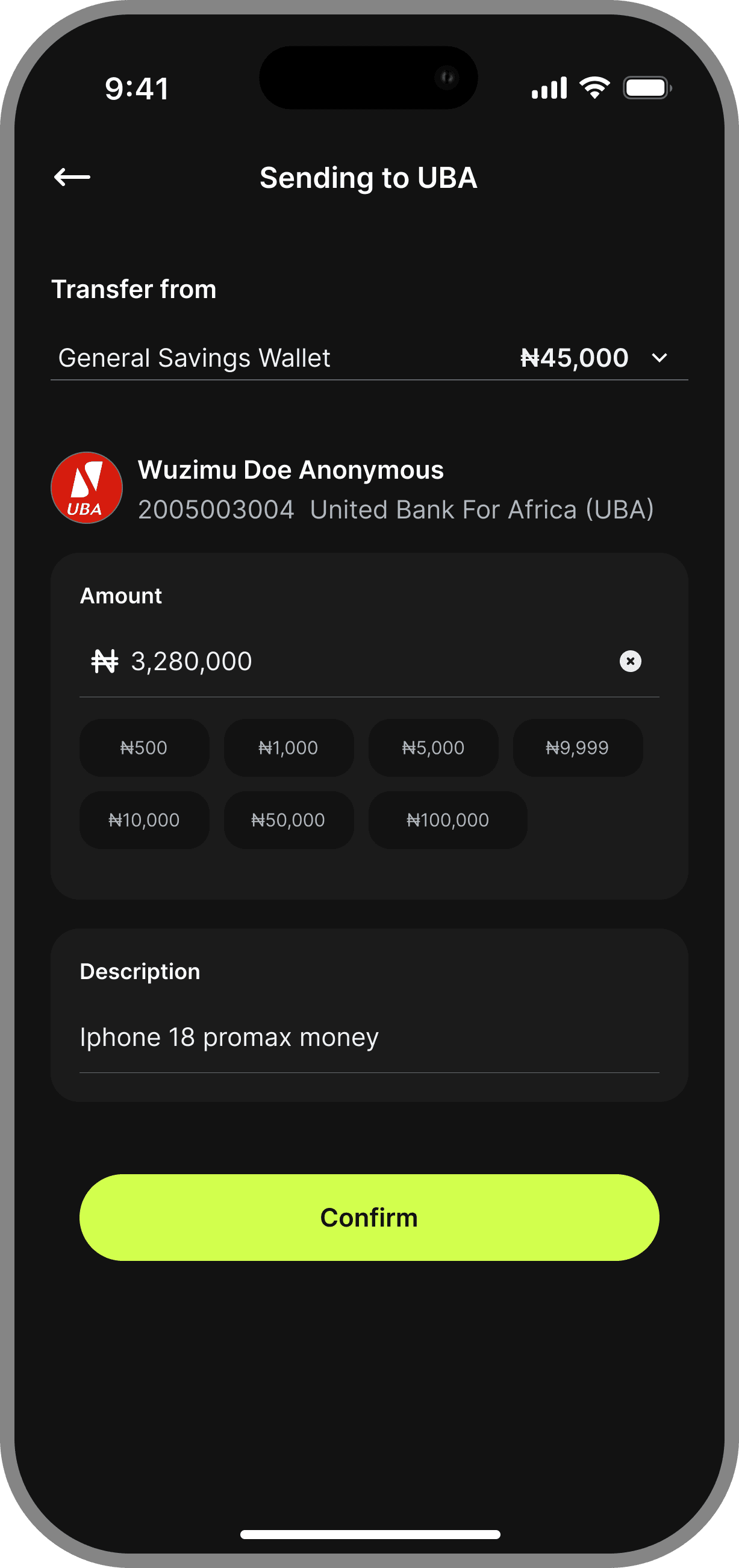
The Problem: The stress of "fat-fingering" a number and sending money to the wrong person.
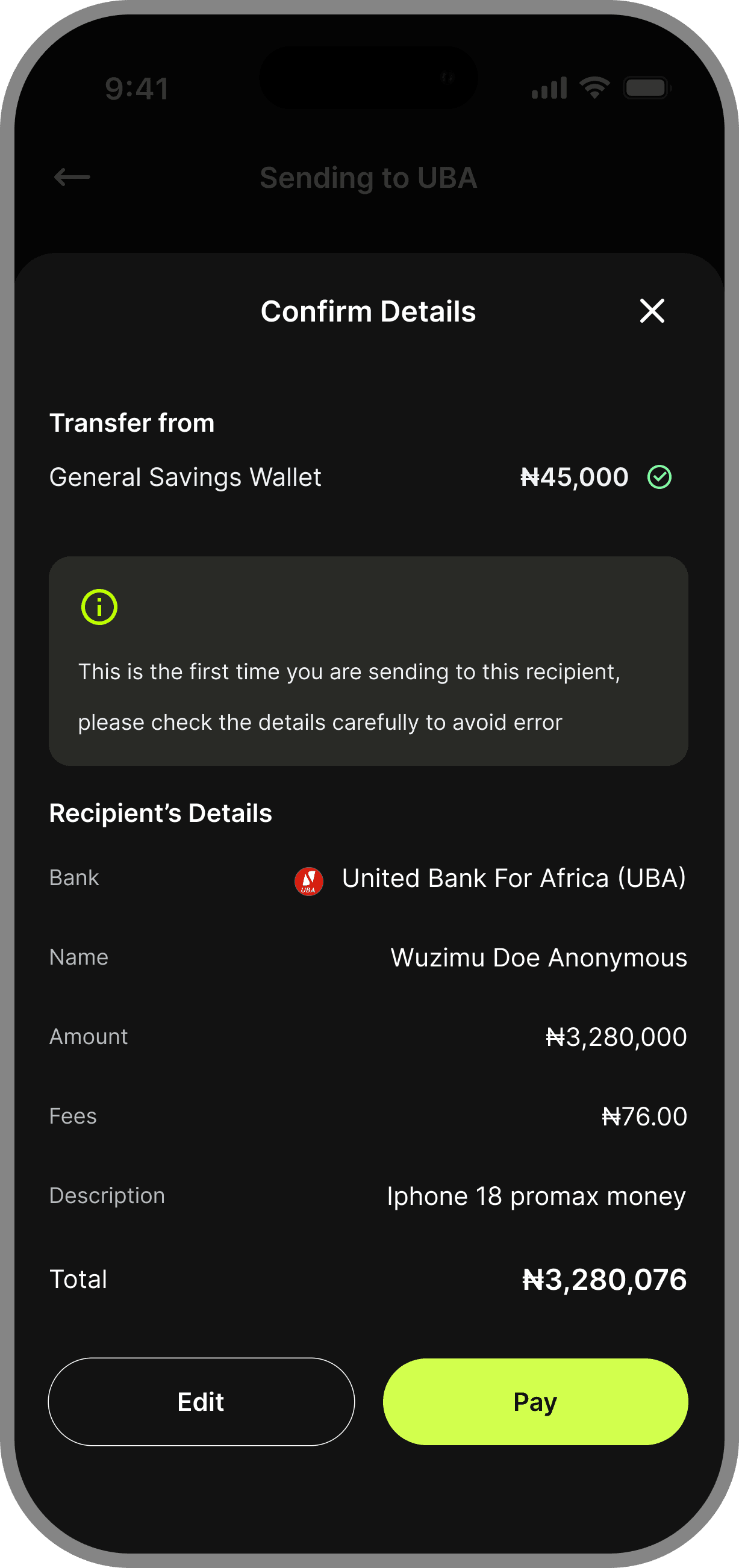
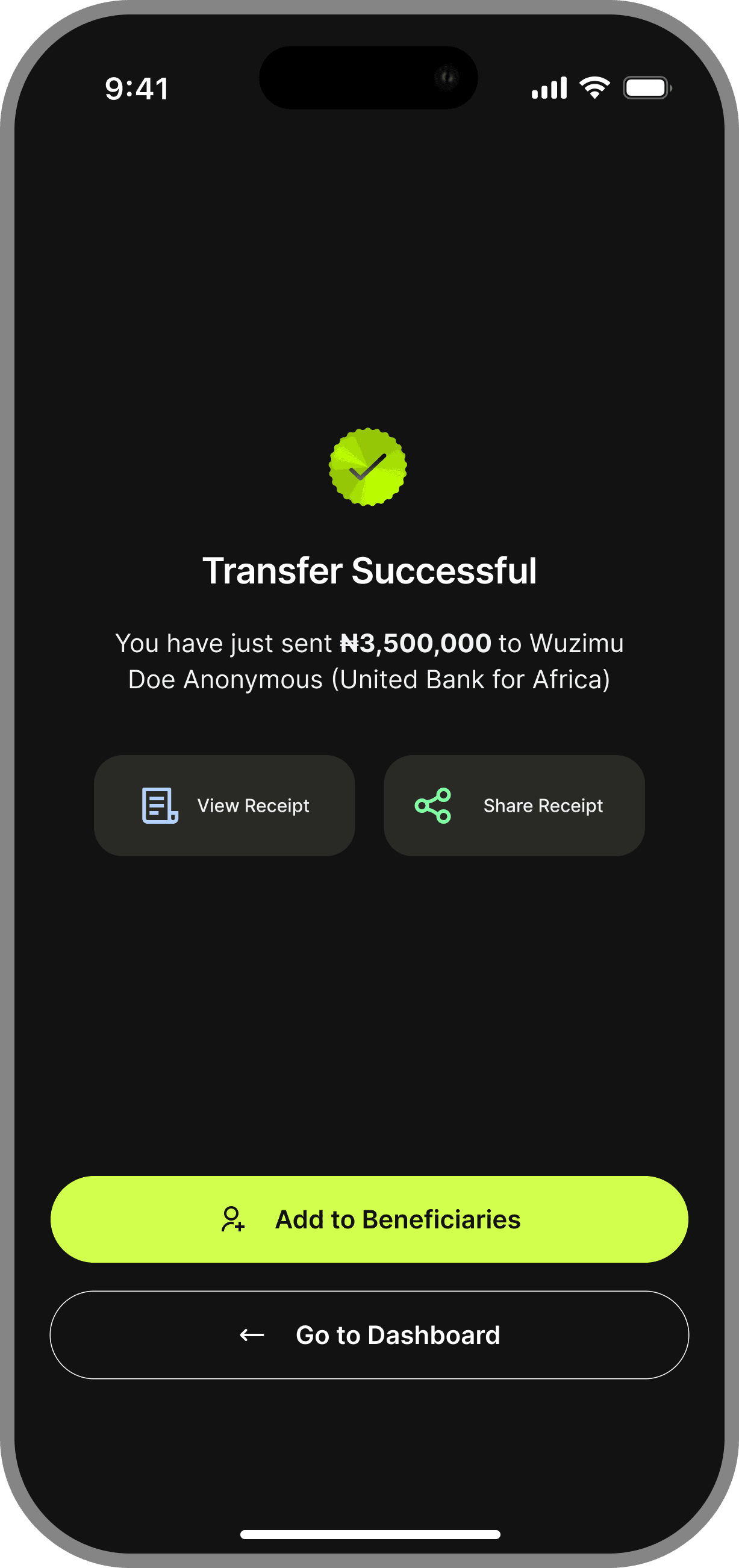
The Fix: The app auto-fetches and displays the recipient's name as soon as the 10th digit is entered. No "Verify" button needed.. it’s instant.
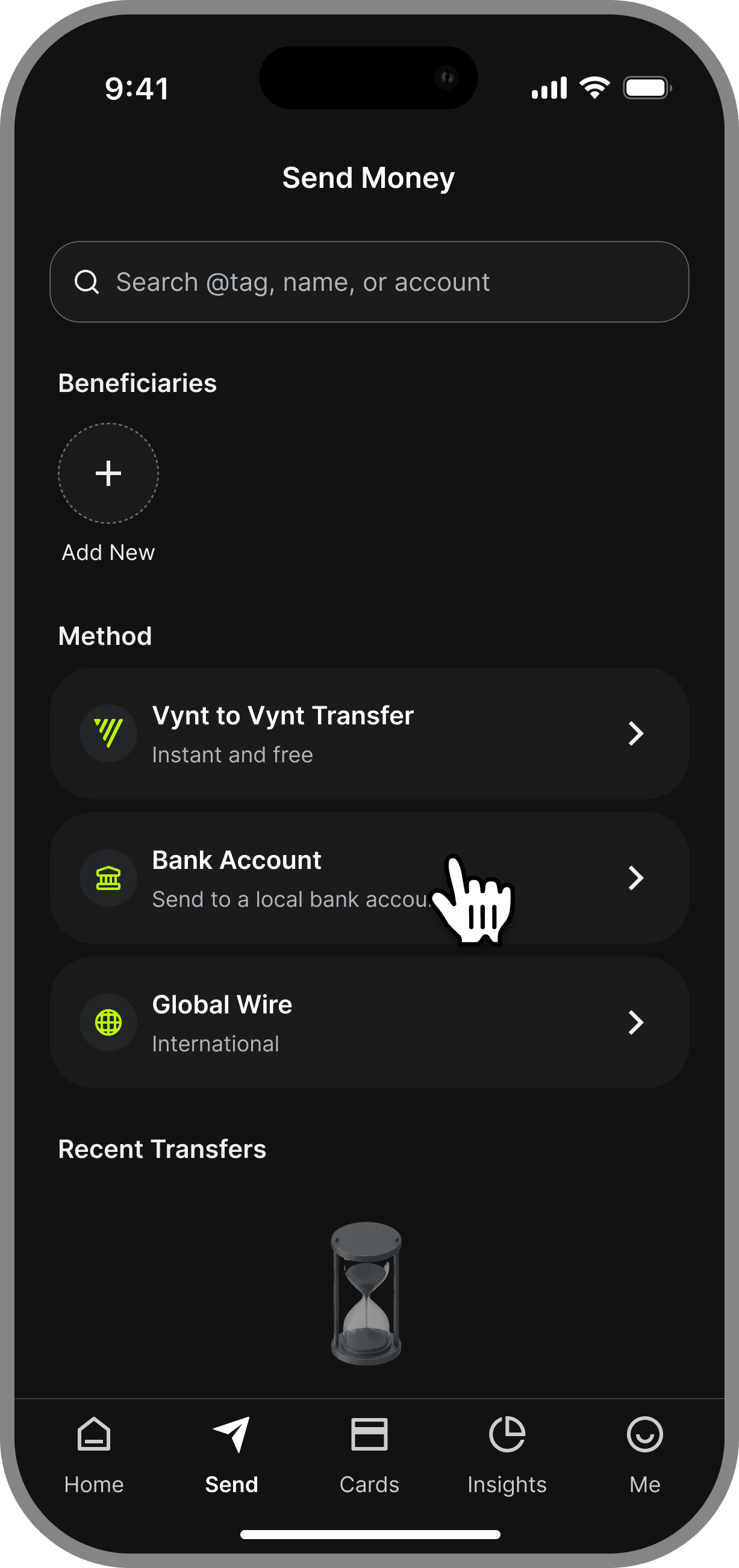
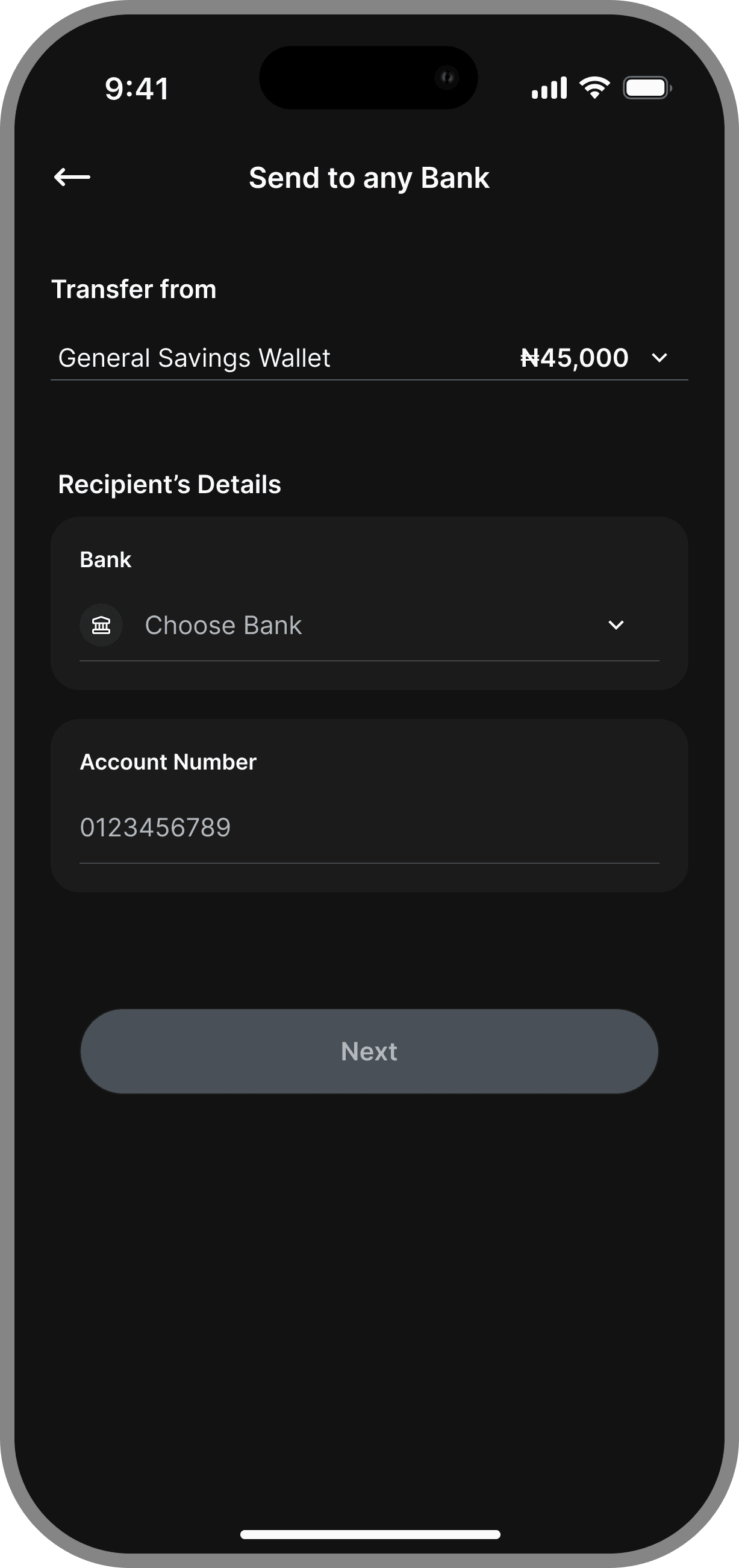
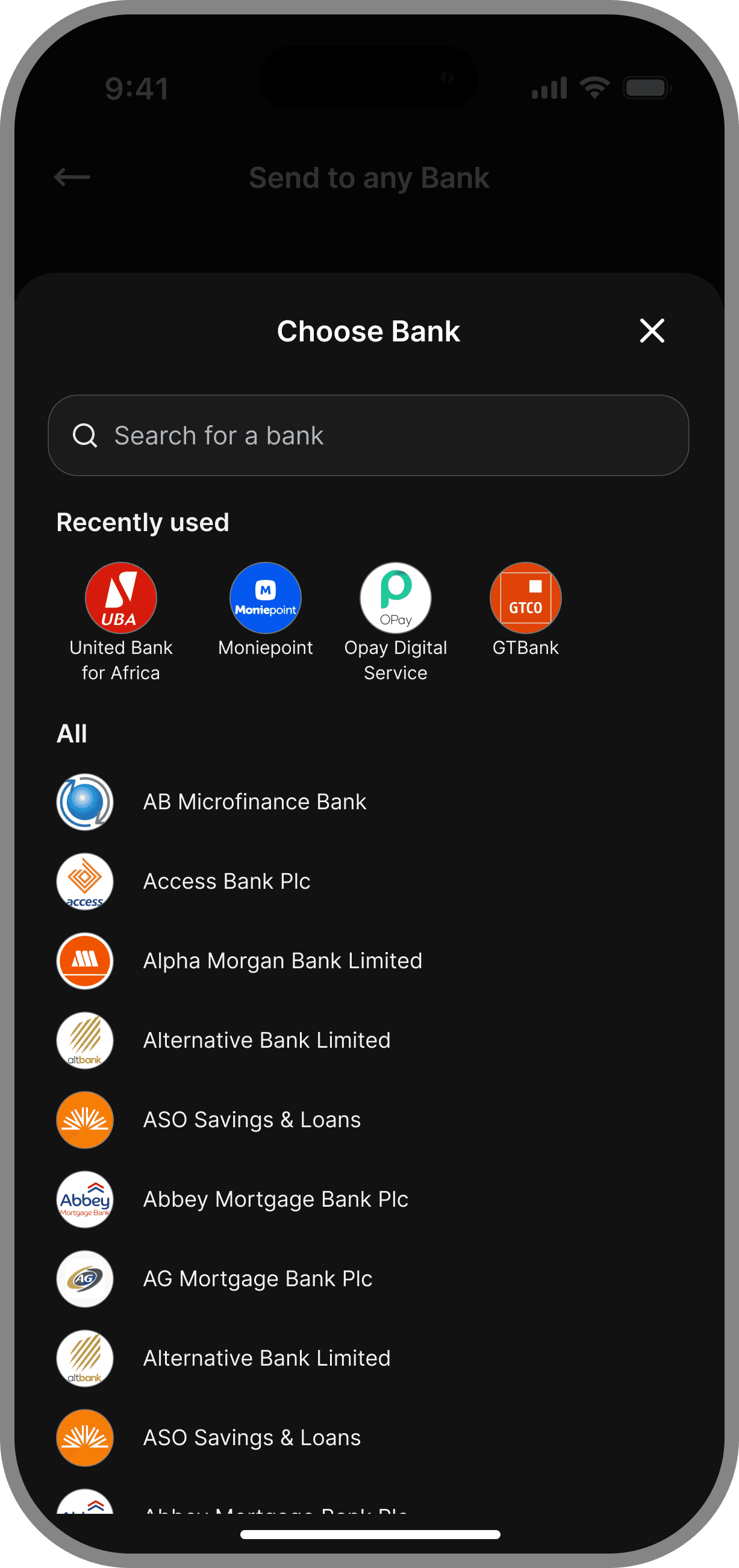
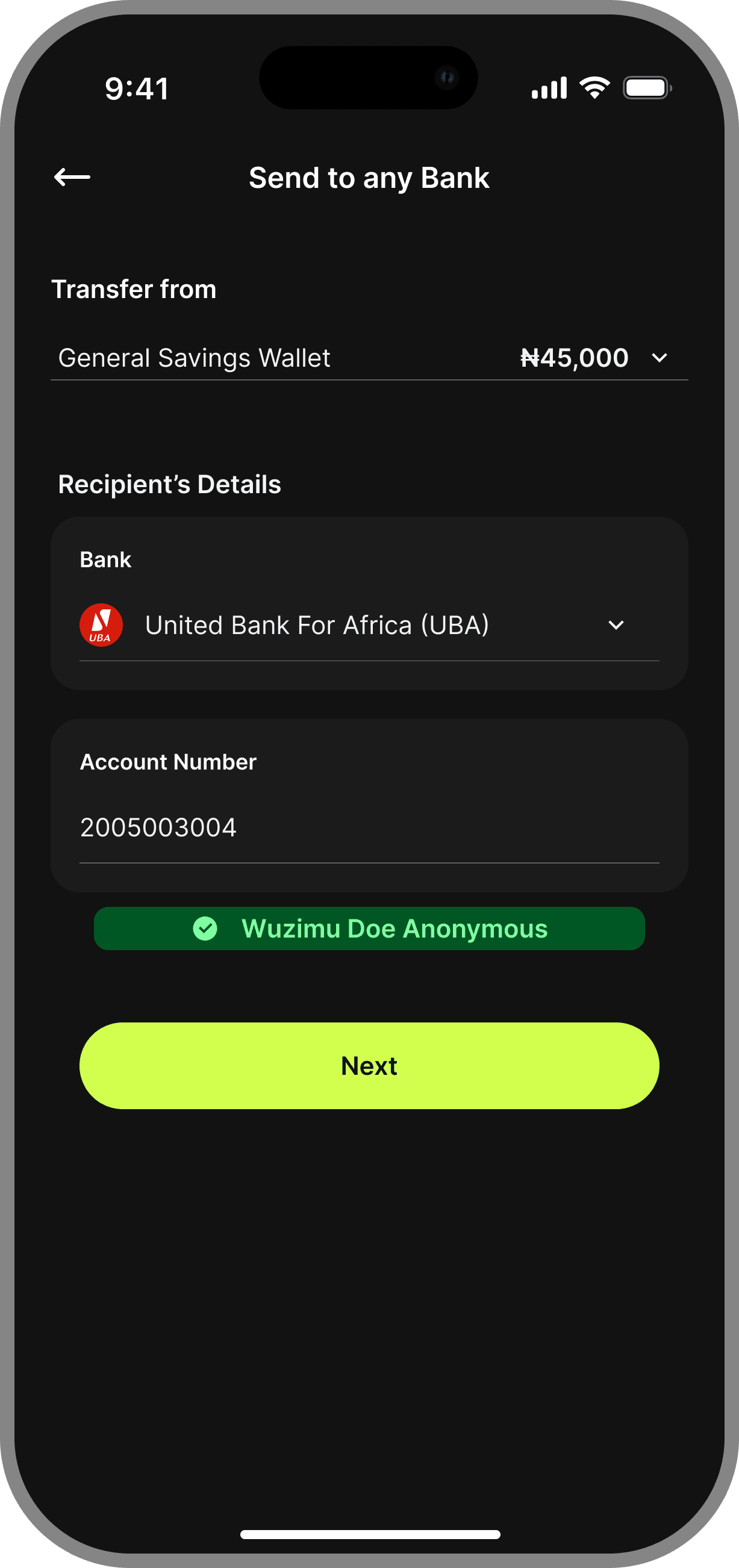
The "First-Time" Warning: For new recipients, a subtle warning badge appears to remind the user to double-check the details.
Active Tracking (Insights & Budgets)
The Problem: Users don't know where their money goes until the wallet is empty.
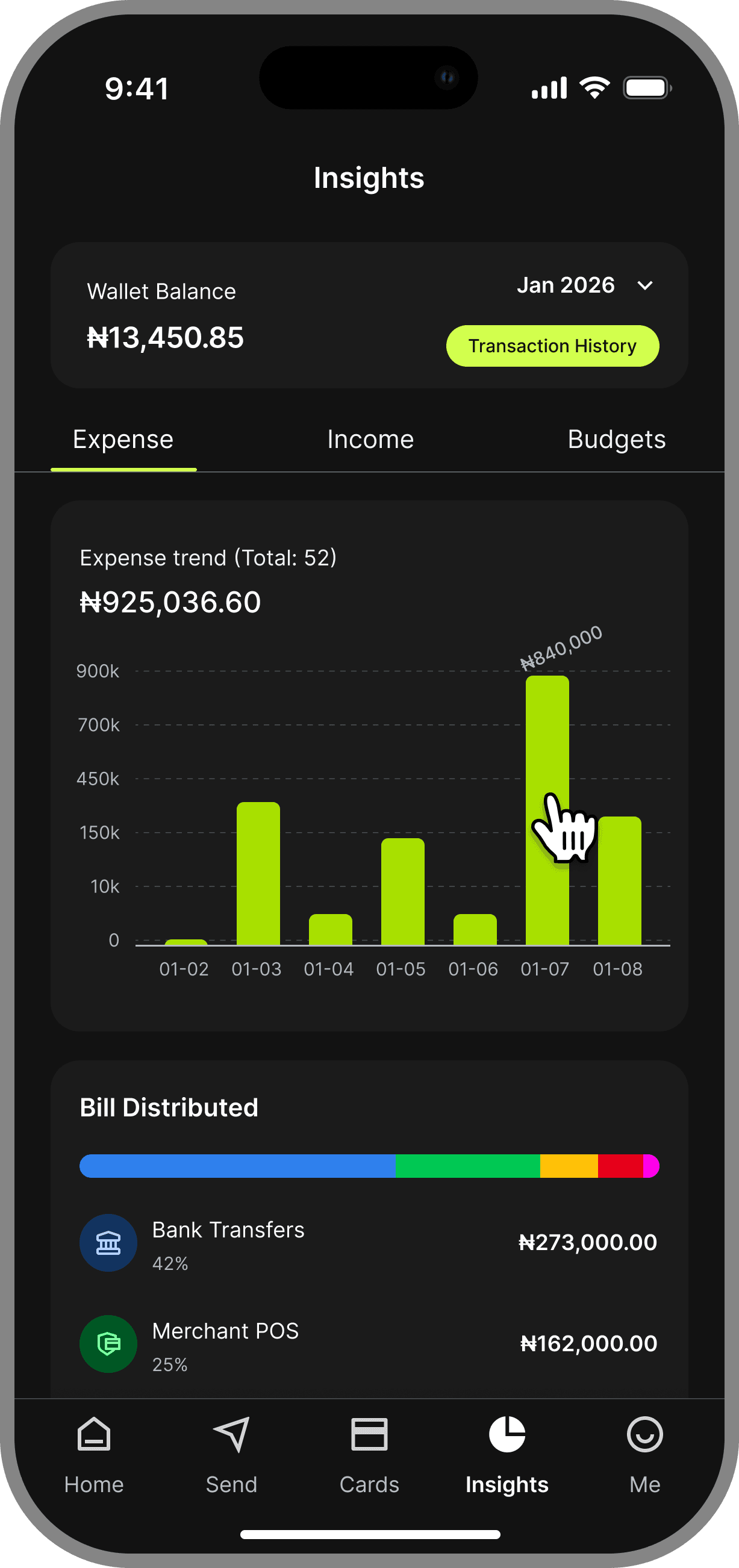
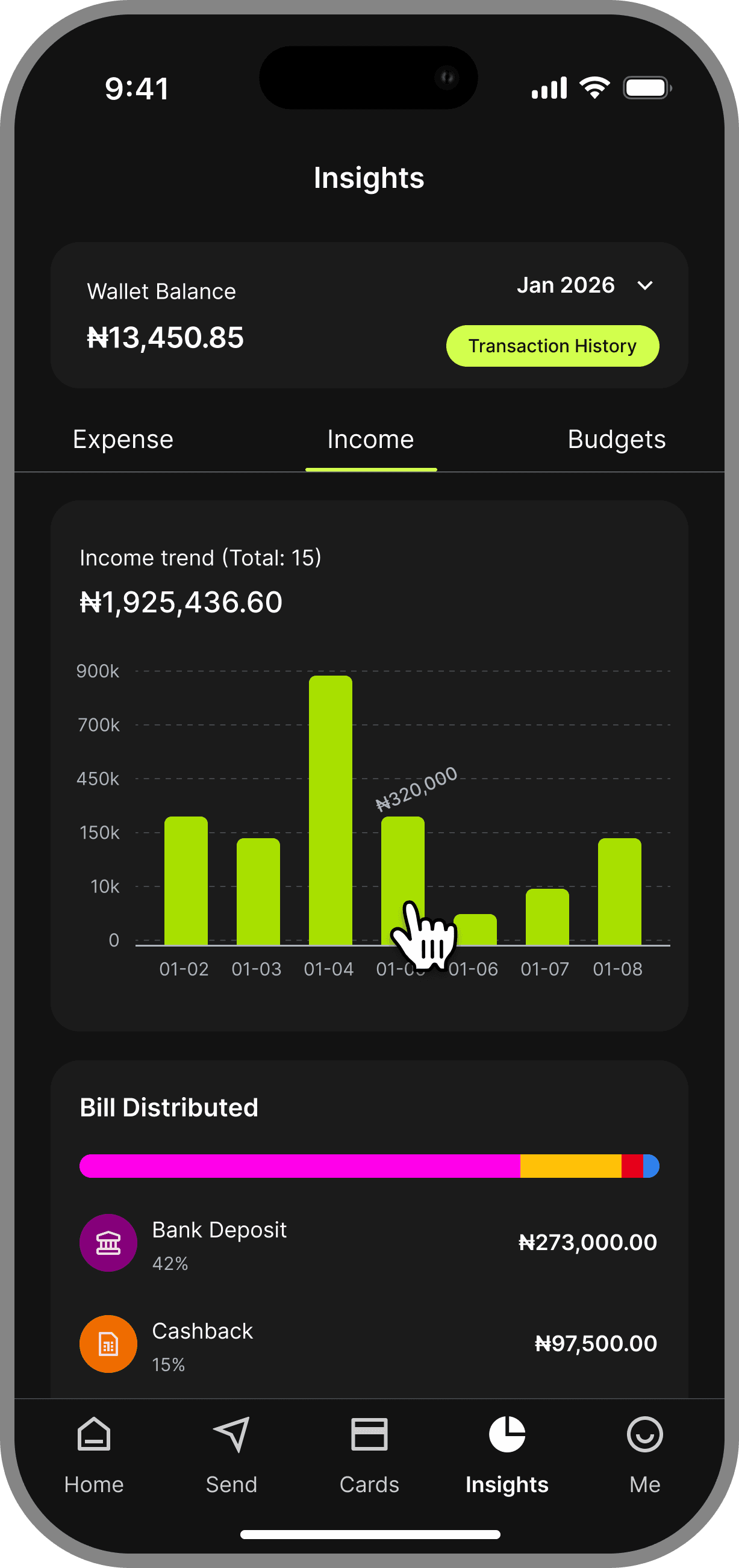
The Fix: We built a two-part Insights hub. An Expense Trend & Bill distribution chart shows daily spending spikes,
While the Budgets Tab lets users set specific "Monthly Goals" for categories like Food and Transport
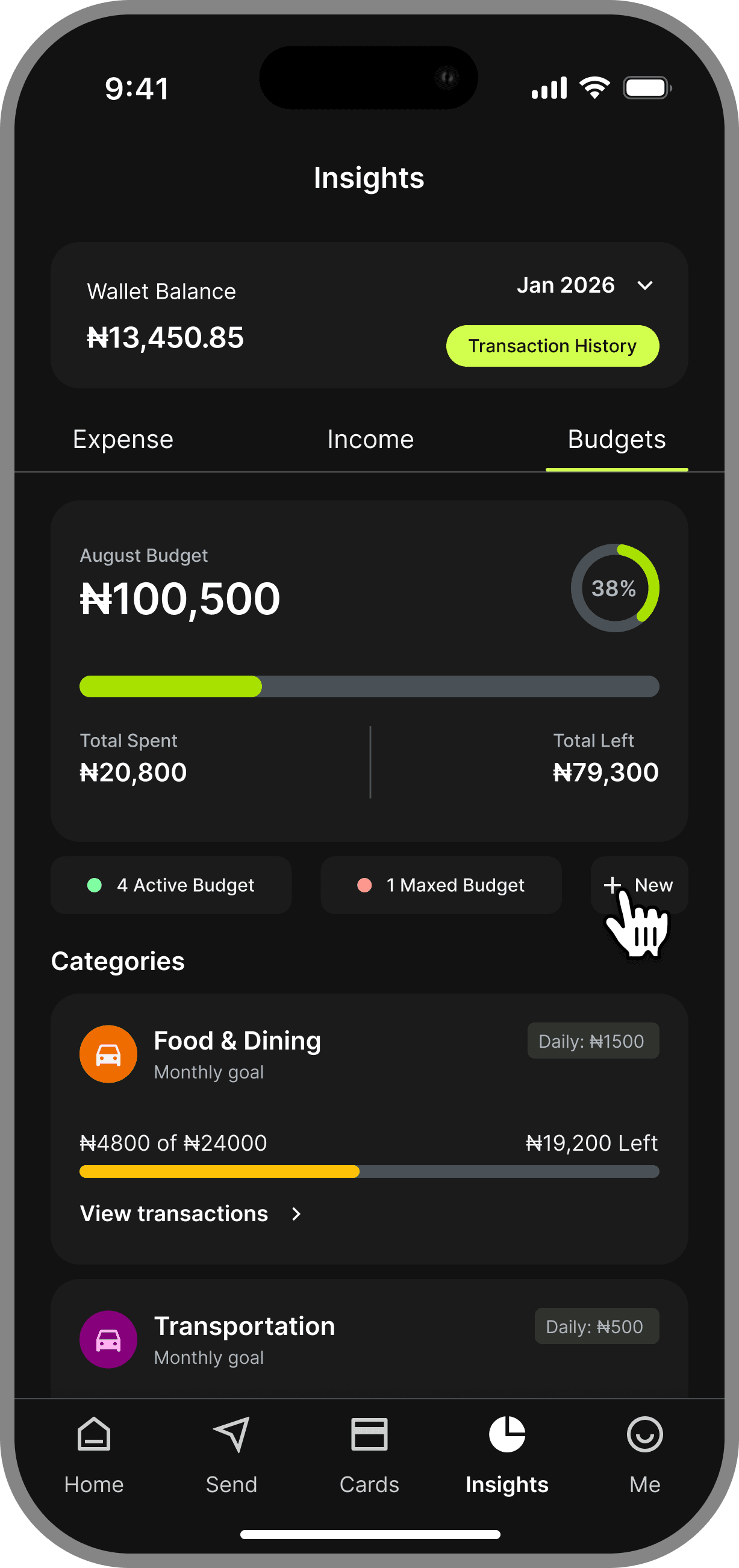
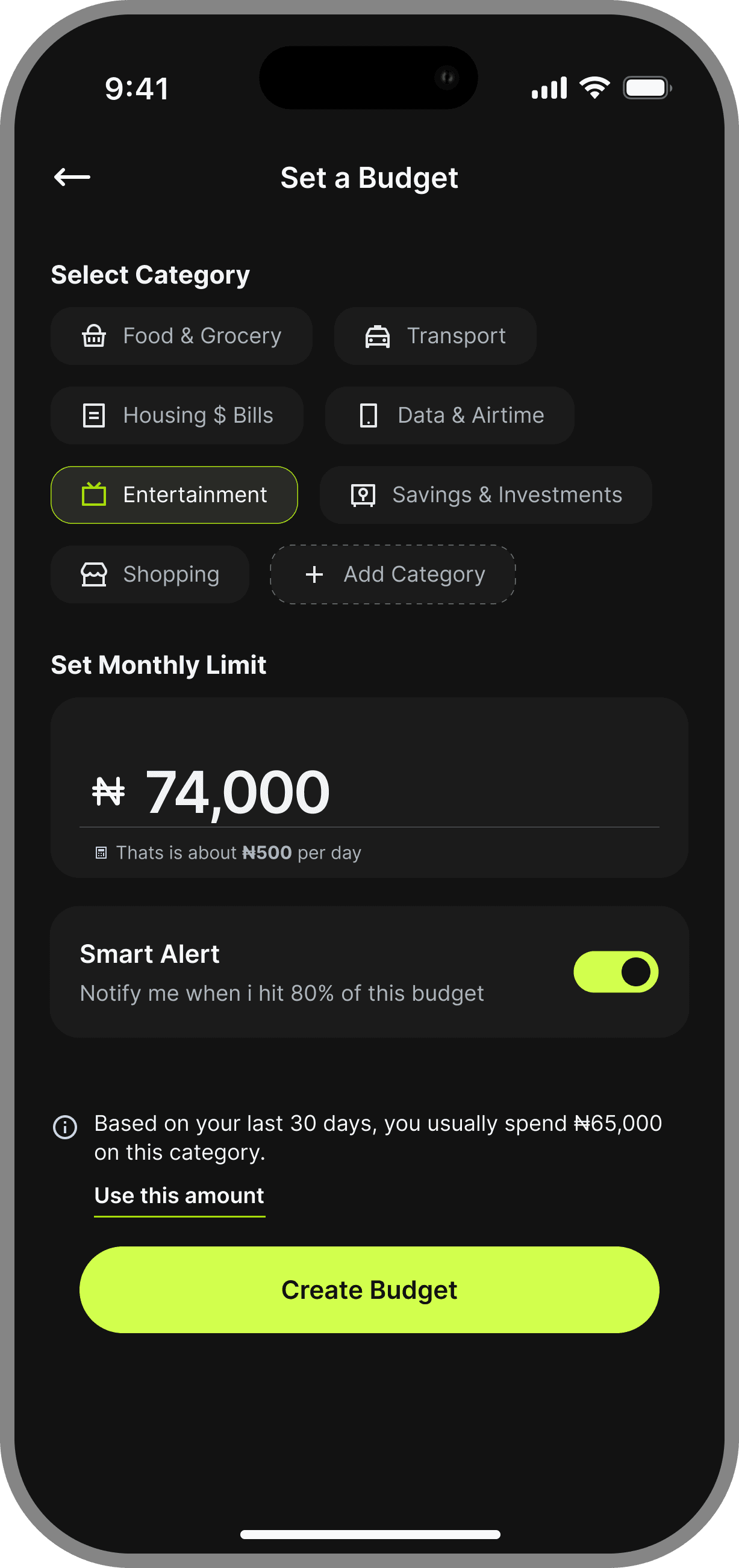
The Result: Users get a real-time "Health Check" with progress bars that show exactly how much is left to spend before they hit their limit.

Final Results & Takeaways
The Outcome By shifting the focus from a traditional banking "form" to a shortcut-driven experience, the app moved from a high-friction product to a daily financial tool.
The pivot in onboarding ensured users were active immediately, while the speed layer made repeat transfers a less than 30 - second habit.